Is AI Making Laptops Obsolete or Smarter?
For months, we have been wondering if AI is better than us. And I know you have been having these thoughts, too. It was understandable for humans to think this way, but for laptops to think the same is alarming.
Laptops worldwide are facing an existential crisis. The reason is AI and how it has taken the world by storm. It is no longer on a URL you enter and use, but it is IN the laptop—built directly into the machine.
While it may be difficult for laptops to get over the crisis, humans are questioning whether this was necessary. Wouldn’t it defeat the purpose of owning a laptop? Or it just might be the upgrade we need.
In an effort to reach the bottom of this, we have decided to hear out both sides and give them an equal opportunity to present their arguments.
Let’s see what valid arguments each side can come up with.
The Smart Side
First, we have the smart side, which argues that AI is enhancing laptops and making them smarter. Companies are coming up with AI PCs left, right, and center, calling it a natural evolution and certainly not a threat.
What Is an AI PC?
An AI PC is the best of both worlds for many. It is specifically designed to integrate AI in tasks efficiently without ever needing to rely on AI clouds. With better speed, privacy, and functionality, AI PCs are the newest obsession for tech enthusiasts. The hardware is dedicated to AI processing and features the Neutral Processing Unit.
|
Traditional PC |
AI PC |
|
Relies on cloud servers for AI tasks |
Processes AI tasks locally for faster results and lower latency |
|
Requires additional software for AI features |
Comes with built-in AI tools like smart editing, assistants, and real-time effects |
|
No Neural Processing Unit (NPU) |
Has a dedicated NPU for smooth AI upscaling in gaming and intelligent workflow automation |
Enter NPU- The Mind Behind AI PCs
This is the biggest feature separating AI PCs from other laptops. The NPU is a specialized processor that works with the CPU and GPU. However, NPU is specifically optimized for AI and machine learning. This processor performs every AI task with better speed, efficiency, and significantly lower power consumption.
Pillars of On-Device AI
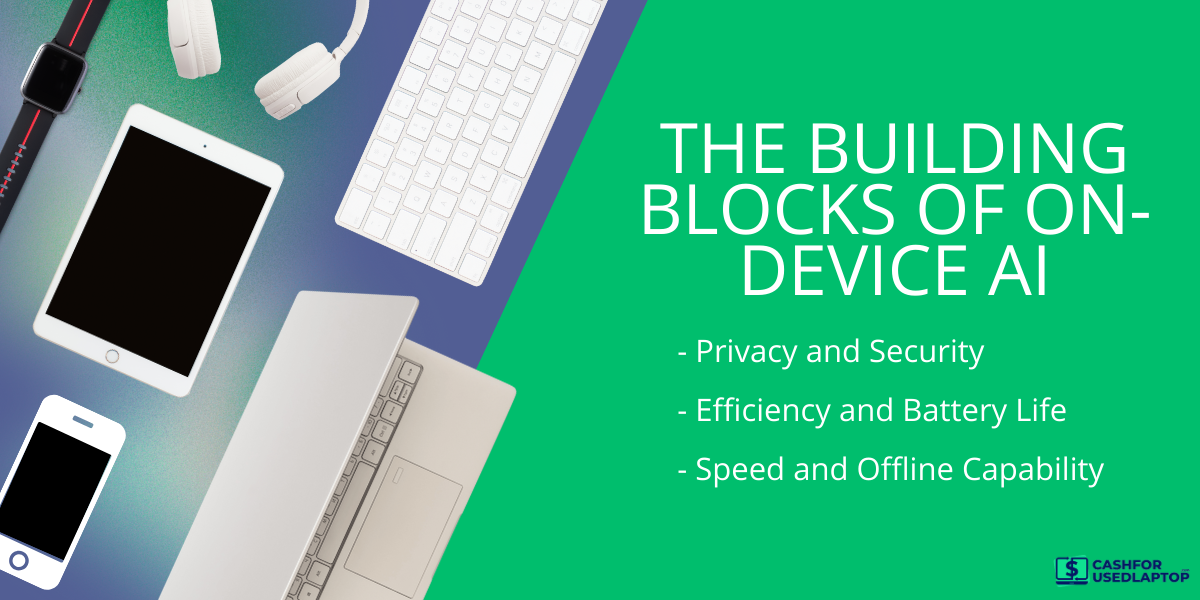
Privacy and Security
It is being debated that cloud AI is not as reliable as we would like it to be. When you use cloud AI, it receives all the information you enter in the chats. Since the data is stored on a remote server, it is susceptible to a data breach. But with an NPU, you wouldn’t have to worry about that. All your data will remain on your machine and is encrypted and protected by the same security protocol used for your operating system.
Efficiency and Battery Life
To understand the efficiency of NPUs, you need to understand that CPUs and GPUs are not optimized for large-scale mathematical computations and take way too long to perform simple tasks, draining batteries.
NPU solves this problem with its thousands of tiny, low-power processing units. These MAC units are specifically designed for AI math and they don’t even take up a lot of energy. NPUs have outdated CPUs and GPUs when it comes to AI and ML specific tasks.
Speed and Offline Capability
Latency is the biggest challenge in cloud AI. If you are using cloud AI for simple tasks, it is hardly noticeable. On the other hand, the delay can be problematic for real-time applications such as image generation and live translation. However, with NPU, you won’t have to suffer the frustration of latency because NPU processes the AI model already on your device.
AI PCs were introduced in March 2024 and were running at speeds of up to 11 trillion operations per second on the NPU, which is fast! And in 2025, we’re pretty sure they must’ve only gotten faster.
Natural Evolution
The NPU market is experiencing great highs and will continue to. It is expected to expand from USD 2.5 billion in 2023 to USD 17.8 billion by 2032 at a compound annual growth rate of 23.7%.
As far as computing is concerned, AI PCs are the only logical step up; many are also calling it a natural evolution.
With time, technology evolves, and what started with GPU is being carried forward by NPU in a better, faster, and more reliable way. The PC architecture is designed to keep up with the times and meet the demands of a new type of computing.
The timing could not have been better. As most of you may already know, Windows 10 is retiring on October 14, 2025, and that means no more free software updates, tech support, or security patches.
Like dominoes, this has pushed many consumers to upgrade, and that means more space for AC PCs. They are the next-gen option and future-proofed with AI right in their components.
After knowing what you know now, wouldn’t you say AI is making laptops smarter? Let’s wait and hear what the other side has to say.
The Obsolete Side
Now, let’s turn the page and see what the obsolete side has to say. They believe AI PCs are not as necessary as IT companies make them out to be.
The Thin Client Argument
Before moving on to the argument, let’s learn what a thin client is and what it has to do with AI making laptops obsolete.
What is a Thin Client?
Have you ever bought a Blu-ray player to watch a movie? Or do you just log on to your Netflix account? The Blu-ray player in this example is the OG PC, and Netflix is the thin client model. While Blu-ray has all the content and processing power to give you a fantastic movie night, Netflix connects to servers housing the movie and streams it for you. Netflix itself doesn’t have to be powerful enough to store the film, but just enough to display the streaming.
Netflix is a thin client in this example. This type of computer relies on central servers for computing power. It has little local storage, is paired with a very basic processor, and is used primarily to connect to a remote server. Each user input is sent to the remote server, and the server handles all the grunt work, including data storage, processing, and applications.
Back To The Argument
Now that you understand the mechanics of a thin client, you must realize that NPU, despite being an impressive addition, is not enough. It is merely a drop in the ocean when compared to a cloud-based GPU cluster. Adding more to the argument, why would users go for a new and very expensive device when they can get a Chromebook and access all of these centralized AI services?
But what does that mean for NPU AI PCs?
-
Less scalability to the most advanced AI models
-
No local installations or updates
-
More expensive
To Buy Or Not To Buy? The AI Subscription
This side holds its ground, arguing that AI PCs are not a new product but a new business model that definitely does not favor customers. People are concerned that there has been a fundamental shift in the software industry’s business model. Previously, we had to buy software that was a one-time purchase, but with the new model, you have to follow a subscription model and keep paying monthly or annually.
It is possible for the AI to be used as a bargaining chip, where you have to keep purchasing memberships to use the basic features of a computer that have always been free. This is expected to be a turnoff for customers who already pay for multiple subscriptions and are not ready to pay one just to use their already expensive laptop.
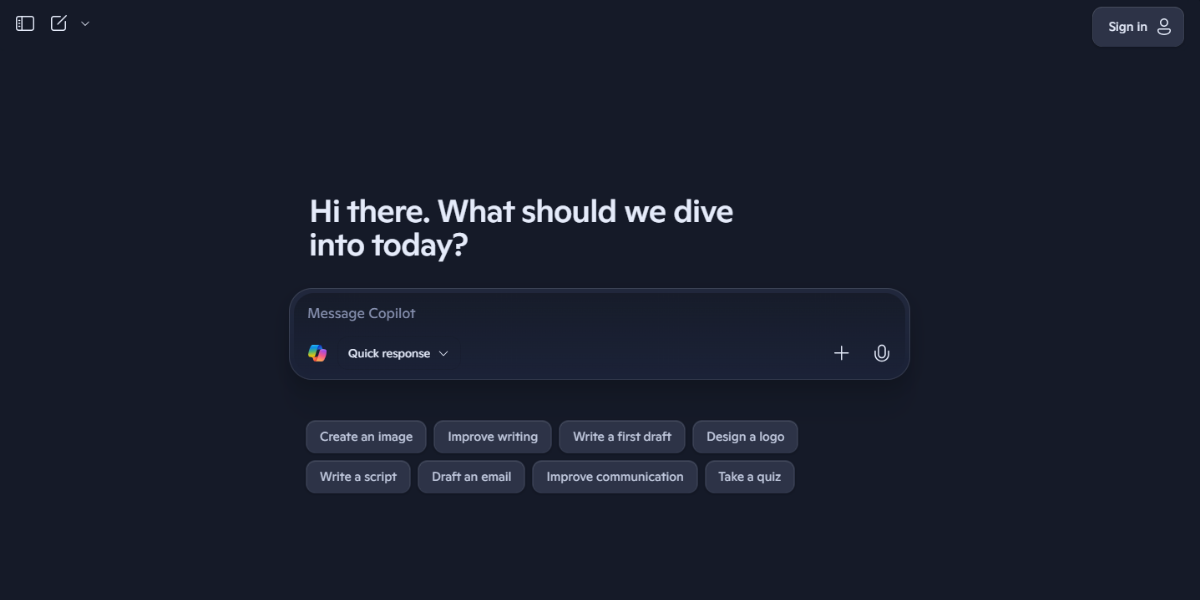
For example, Microsoft Copilot Pro is a subscription-based service, while the free version offers basic assistance. Even ChatGPT, despite having potent versions, still has a paid subscription with faster response times and other capabilities.
But why are companies pushing AI subscription modes? I believe the top three reasons are:
-
These AI models run on cloud servers, which are very expensive to build, maintain, and power. To fund these models effectively, a subscription model is the best option.
-
It is important to have money to keep developments rolling, and investors will not invest if the business is not making money.
-
It is a rat race to get the latest AI model. And companies smartly justify the cost by saying they have the next best thing.
Solution? Found. Problem? Doesn’t Exist.
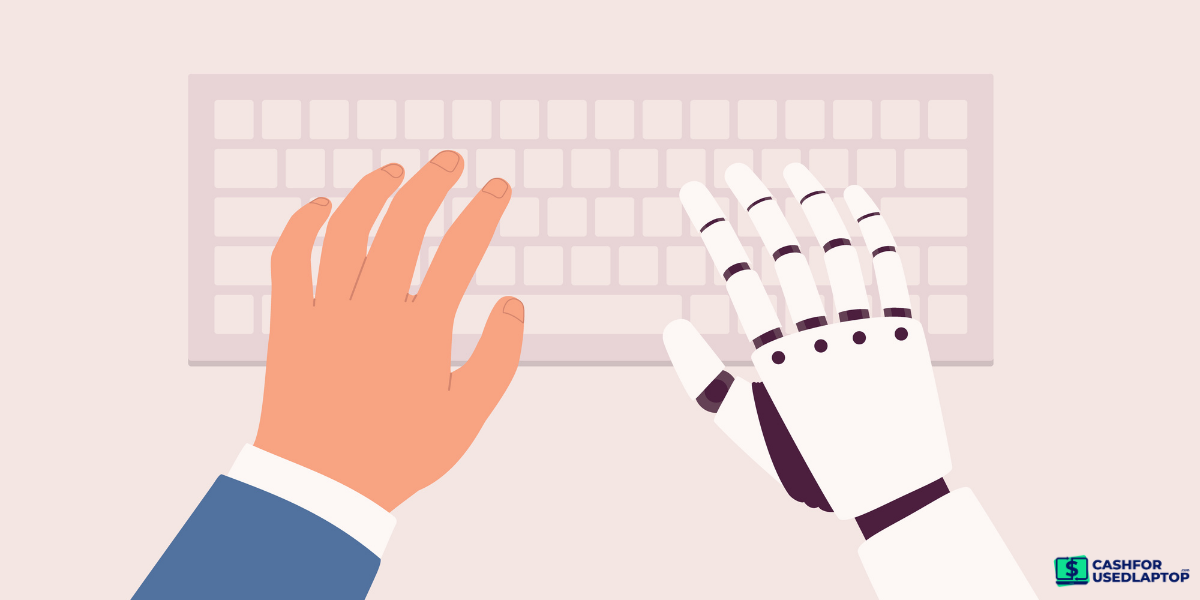
The obsolete side argues with sheer skepticism that AI PCs are a solution to a problem that simply doesn’t exist. Users are divided in their beliefs that built AI is not compelling enough to make an upgrade or that the existing, might I add, free AI models are getting the job done!
Have you heard of an urban legend called the ‘Killer App’? No, this is not a serial killer. It is an application that is not only useful but highly desirable. This kind of app drives the adoption of all underlying technology. The impact of such apps is mostly explosive as they accomplish multiple goals, such as innovation and trends, and even raise the bar for competitors.
ChatGPT is one of the best examples of a killer app. Before ChatGPT, most of us didn’t even know there was an app you could basically talk to. But it is the ChatGPT API that is the true killer app. Linked back to the argument, AI PCs have yet to introduce a Killer App that would make people want to stand in line or buy a subscription to use.
Basically, AI PCs are a solution waiting for a problem; as soon as that emerges, laptops may be obsolete.
What Does It Mean For The Future?
The future is uncertain, and one must be prepared for how quickly things are changing. Our relationships with our laptops are those of command and action. We have always commanded our laptops at will to do one thing or the other. But that might not be the case soon enough. It is very likely that our laptops will come up with suggestions before we can even think of a command.
This anticipation of what we will do next gives AI the leverage to nudge us into making decisions we might or might not have made. With time, we may become heavily dependent on AI to make our decisions for us and not the other way round.
Who Are AI Laptops Really For?
AI laptops are hitting the shelves in hundreds, but who are they really for? Who in today’s time needs AI right on their laptop and can’t use AI clouds? Let’s make it simpler for you:
Who Should Buy an AI PC Today?
If you are wondering whether you should buy an AI PC today, this will help you make a decision. Here are all the people who can take a leap of faith and invest in an AI PC today:
|
Professionals |
Reasons They Should Invest In An AI PC |
|
A Video Editor |
Reduces rendering times and performs complex AI-powered tasks like video stabilization or object recognition. |
|
A Graphic Designer |
Instantly sees results from AI-accelerated features in Adobe Photoshop, such as Generative Fill. It allows for exploring more creative ideas in a single session. |
|
A Software Engineer |
It uses the NPU for rapid prototyping and testing of fine-tuned AI models. Sending data to a cloud server is much faster and more private. |
|
A Data Scientist |
It runs smaller machine learning models on large datasets locally, enabling faster experimentation and analysis without consuming significant power. |
|
A Legal Professional |
They can leverage on-device AI to record confidential meetings in real time or summarize sensitive documents, ensuring data never leaves the laptop. |
|
A Marketing Analyst |
Uses AI-powered features in spreadsheets to run predictive analytics or generate quick reports directly on their machine. This can speed up workflow by two-fold. |
If you are one of these professionals, now would be the best time to invest in an AI PC. If you are already using a laptop, don’t hold back—upgrade it to an AI PC. As for your old laptop, sell it to Cash For Used Laptop. This way, you can get more money to buy an AI PC, and we know how expensive they can be.
Who Can Wait?
If you’re not a data scientist or a marketing analyst, you’re probably one of those who can let the hype pass and wait for their decision to buy an AI PC. Check the list below:
|
Individuals |
Reasons They Shouldn’t Invest In An AI PC |
|
A Casual Browser & Streamer |
For basic web browsing, video streaming, and using standard office applications, their current CPU and GPU are powerful enough, and the dedicated NPU would be unnecessary. |
|
A Hardcore Gamer |
For gaming, the GPU is the primary driver of performance. While some games might use AI for features like upscaling in the future, the NPU is not an immediate need for the hardcore gamer. |
|
A Budget-Conscious Student |
An almost broke college student needs a reliable computer for essays, research, and remote classes. A standard PC with a modern CPU offers better value for their needs and can last them a good couple of years. |
|
A Traditional Office Worker |
Working with spreadsheets, presentations, and email does not warrant a need for an AI PC. Having an NPU-powered PC will only dent the budget and is not feasible for daily, mundane tasks. |
Those with fomo who want to scratch the itch of getting a new laptop can skip the AI PC and go for an advanced version of a GPU-powered laptop that will give them a taste of the latest tech while still being within their budget. To fund your upgrade, sell your used laptop for cash and invest in a better, more technologically advanced one.
If you are unapologetically Gen Z, then chances are that you love the environment and money and wouldn’t want to take any of them for granted. In that case, buy the latest but refurbished laptop so you can save money and the environment while still getting the best performance.
The Final Showdown
Much like presidential debates, this debate has solid points on both sides. You be the judge, take a look at your surroundings, and decide how big a role AI can play in your laptop usage. The smart side continues to debate that AI PCs are a necessary and natural evolution, while the obsolete side is still not convinced. The truth likely lies somewhere in between.
The future holds all the answers we seek now. If developers succeed in creating a killer application, the hype for AI PCs will only increase. Before that happens, beat the crowd, sell your laptop for cash, and get an AI PC. Things may change rather quickly; this time, don’t let AI surpass you, own it.