Why Employers Should Encourage Laptop Trade-Ins to Reduce Remote Work Fatigue

Remote work has brought freedom, flexibility, and the comfort of working from anywhere, but it has also introduced a new kind of exhaustion. Many employees find themselves mentally drained, unfocused, and constantly battling fatigue despite fewer commutes and more flexible schedules. To fix this and ease the pressure, employers often respond with wellness programs, mental health breaks, or online team activities.
But do you know what often goes unnoticed? The very tools employees rely on every day: their laptops, which might be part of the problem. Slow performance, constant freezes, overheating fans, and endless loading screens can quietly chip away at focus and patience. Over time, this “tech fatigue” builds up and adds to the stress of remote work.
Laptop trade-ins provide a way to address this by encouraging employees to upgrade outdated devices. This tech refresh is a meaningful step toward improving well-being, productivity, and sustainability.
The Link Between Outdated Laptops and Remote Work Fatigue
Have you ever found yourself staring at a frozen screen, tapping the mouse, waiting for a slow laptop to load something that should ideally take seconds? It’s small, but over time, it builds into frustration and that’s part of what remote work fatigue really is.
When your tools don’t keep up, your mind, body, and emotions pay the price.
-
According to a study by Onsitego, over 82% of laptop problems are hardware-related, not software issues—things like display or keyboard issues, battery or Wi-Fi glitches.
-
Another report found that remote workers face tech-support issues weekly about 73% of the time, spending roughly 3 hours a week just trying to fix or work around problems.
-
Also, in the US, more than half of remote workers say their devices perform more slowly outside the office, and many cite device performance as the top three issues that hinder their productivity and employee experience.
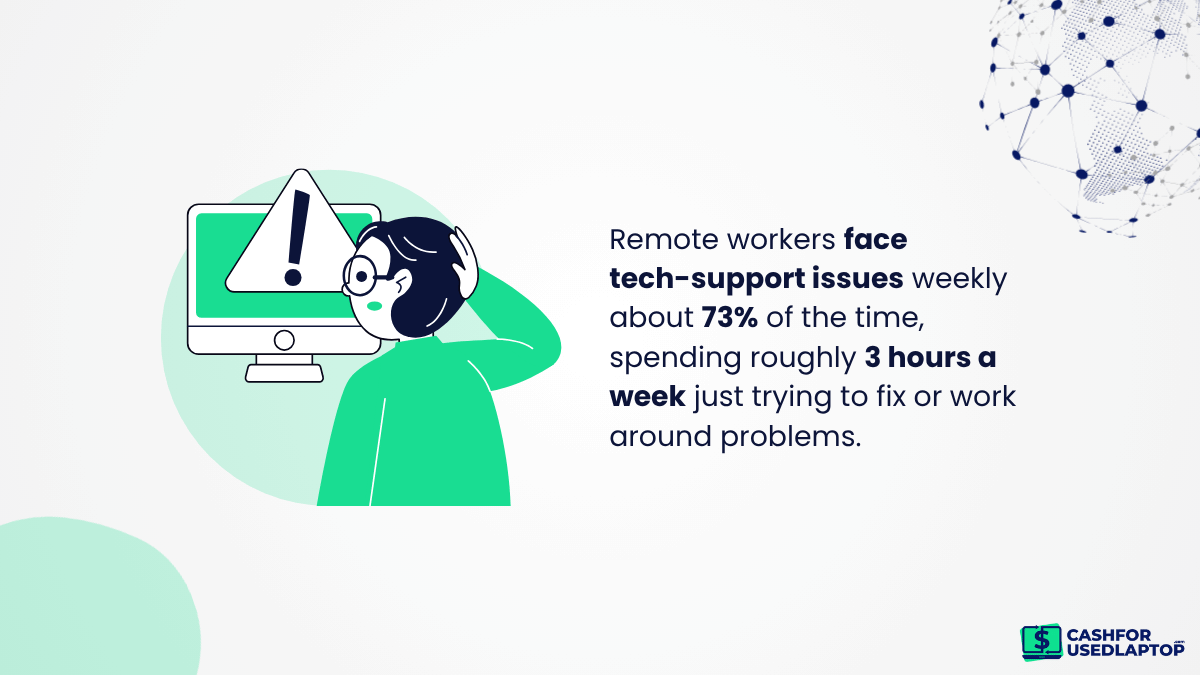
These stats show that it’s often time to let go of a laptop—that old, lagging machine is a barrier to focus, mental sharpness, and well-being.
How Laptop Trade-Ins Can Improve Employee Well-Being
Encouraging employees to trade in their old laptops is a tech upgrade and a thoughtful investment in people, productivity, and sustainability. A company-backed trade-in program ensures consistency, security, and access to reliable devices that make remote work easier.
Compared to handing out simple cash incentives, the laptop trade-in vs cash-for-laptop approach ensures every employee gets a system that fits their needs and the company’s standards. Here’s how it benefits everyone involved.
1. Boosts Employee Performance and Mental Well-Being
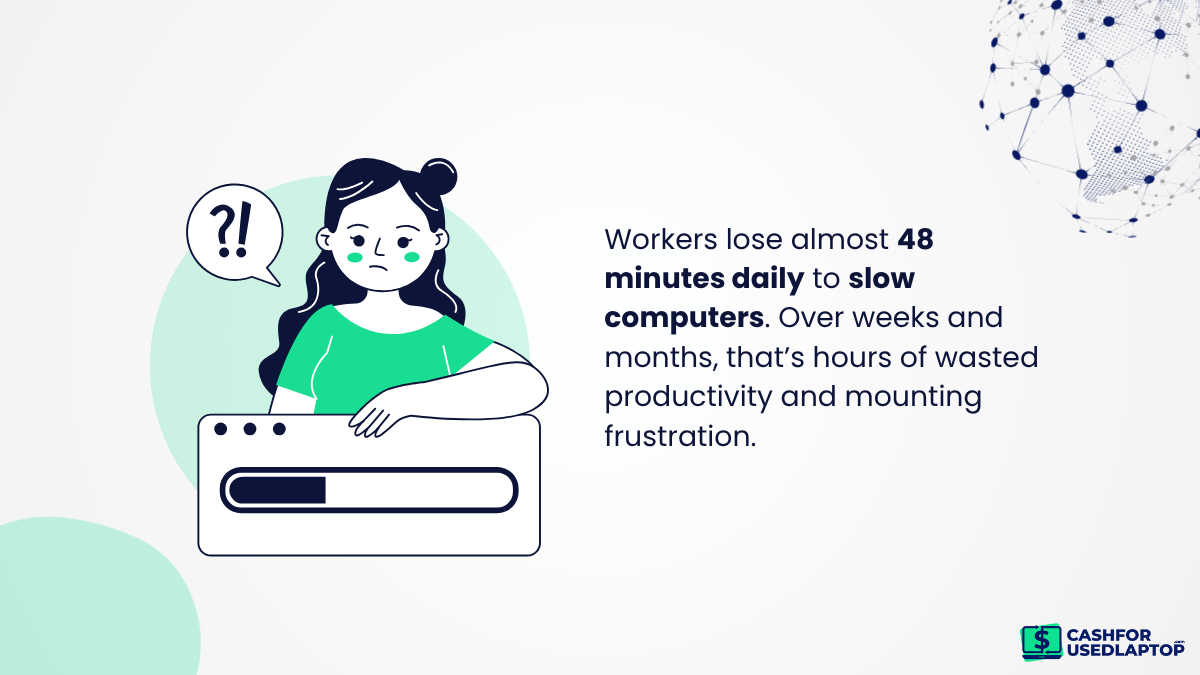
When employees constantly deal with slow, unresponsive laptops, it drains their energy faster than they realize. A lagging system can break focus dozens of times a day, and that interruption adds up. According to a survey by IndDist, workers lose almost 48 minutes daily to slow computers. Over weeks and months, that’s hours of wasted productivity and mounting frustration. Upgrading through a trade-in program removes those small but persistent irritations. Employees can focus on their work, not on whether their device will crash during a meeting.
Better hardware also supports mental well-being. Newer laptops come with quieter cooling systems, better screen quality, and improved ergonomics, all of which make long hours in front of the screen less physically and mentally taxing. Getting the perfect laptop can make all the difference for remote workers or those constantly on the go. Beyond the technical benefits, a smooth, responsive laptop also boosts morale. Employees feel supported and valued when the tools they rely on make their workday easier.
2. Strengthens Environmental Sustainability
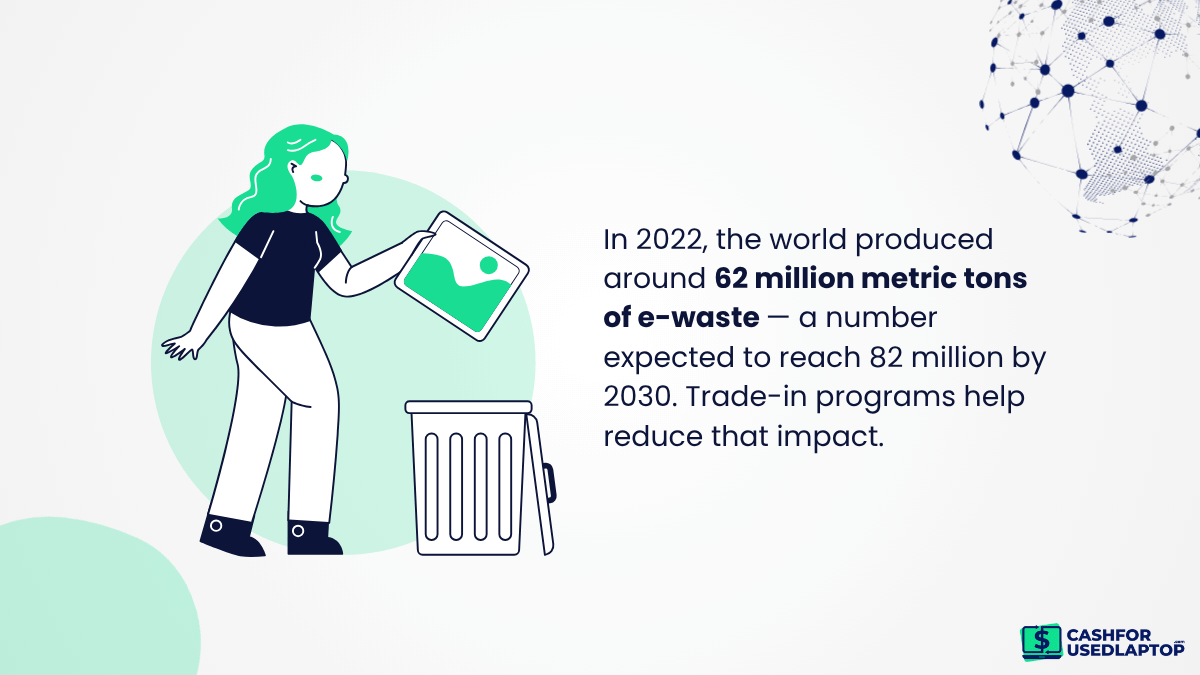
The environmental upside of laptop trade-ins is hard to ignore. Instead of tossing old devices into landfills, where they contribute to mounting e-waste, companies can ensure those laptops are refurbished, repurposed, or recycled responsibly. In 2022, the world generated about 62 million metric tons of electronic waste, and this number is expected to hit 82 million by 2030 (Reuters). Every company that adopts a trade-in program helps cut into that number.
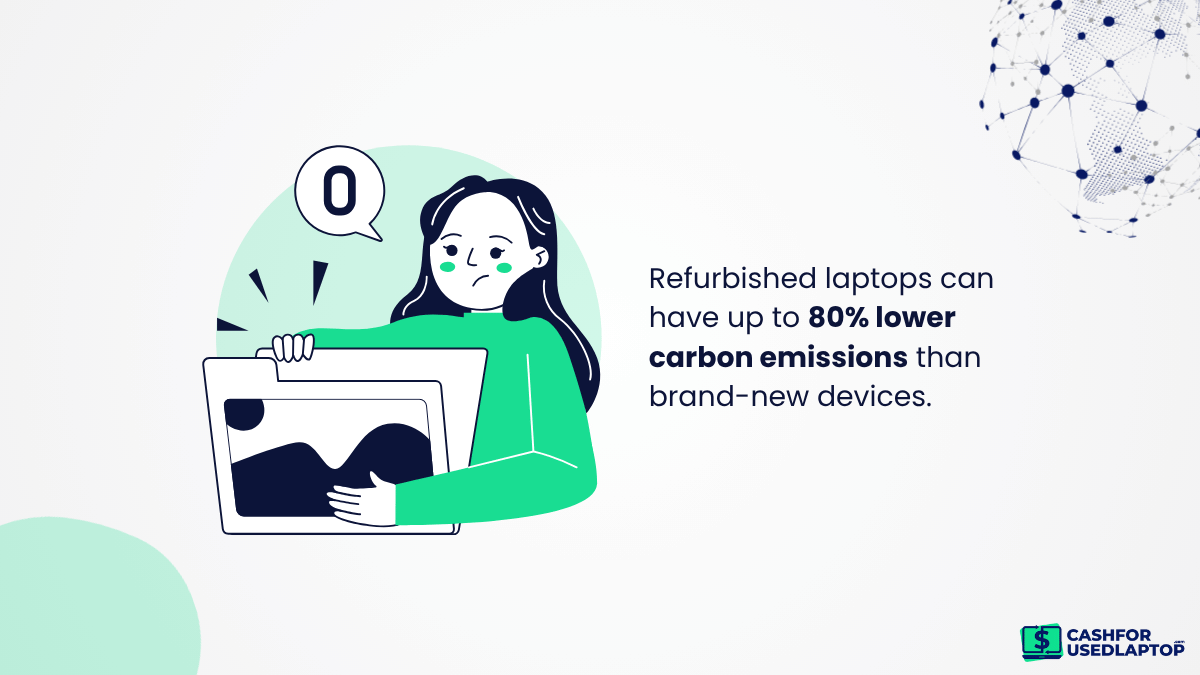
Trade-ins also have a clear carbon benefit. Refurbishing laptops instead of manufacturing new ones from scratch dramatically reduces greenhouse gas emissions and conserves raw materials like copper, lithium, and rare earth metals. It’s also a reason why people prefer refurbished laptops, not because they cost less but because they generate far fewer emissions. One study found their carbon footprint to be up to 80% lower than new devices.
For companies building CSR initiatives, this move sends a strong signal of responsibility, showing that caring for people and the planet can go hand in hand.
3. Offers Financial and Operational Advantages
From a financial standpoint, trade-in programs are a more structured solution than simply giving out cash allowances. Compare it with cash for laptops, and trade-ins often come out ahead because they secure bulk discounts, vendor credits, and warranties while maintaining control over the quality and compatibility of devices. This approach helps companies upgrade efficiently without overspending.
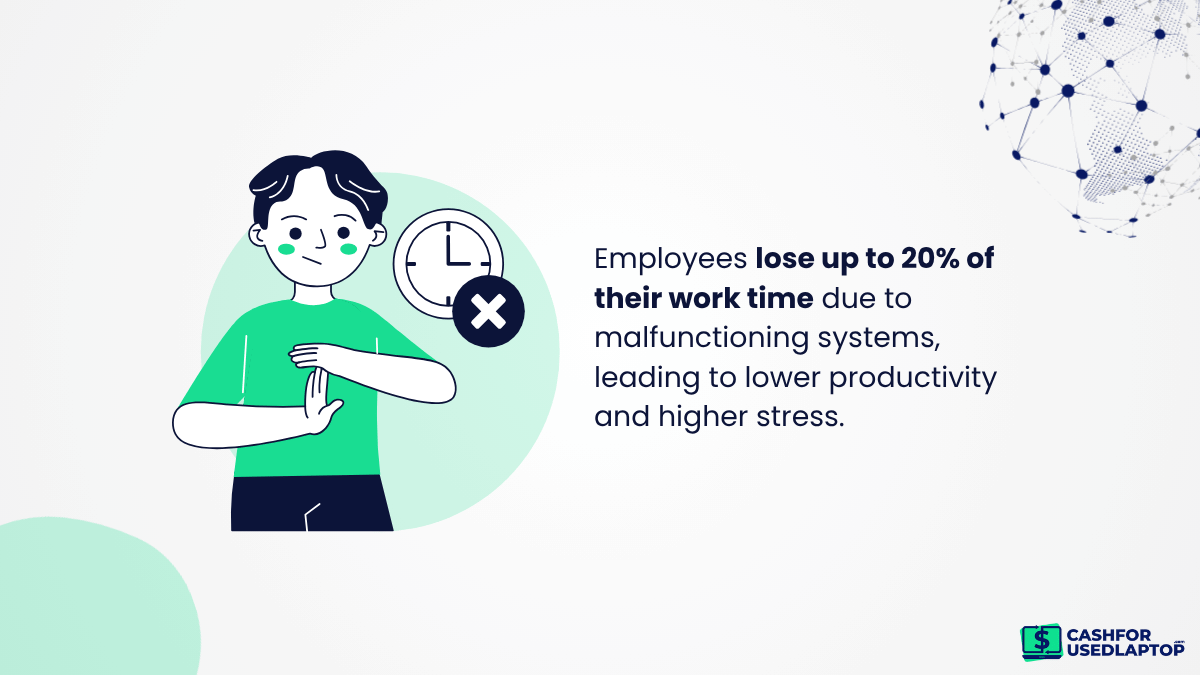
There’s also a clear operational gain. Newer laptops mean fewer IT tickets, less downtime, and lower maintenance costs. A study from Roskilde University found that employees lose 11–20% of their work time due to malfunctioning systems, which translates directly into lost productivity and higher stress. Reducing these inefficiencies pays off fast both in performance and morale. Moreover, when technology works well, employees can focus on creative, value-driven work rather than troubleshooting avoidable problems.
4. Enhances Corporate Reputation and Culture
Finally, implementing a trade-in program can do wonders for a company’s image and internal culture. It’s a visible demonstration that leadership cares about the everyday experience of its people, not just profit margins. Providing employees with high-performing, eco-friendly laptops signals commitment to both comfort and sustainability.
Offering reliable gear can also be a competitive advantage for companies recruiting remote professionals or global freelancers. Providing someone with the perfect laptop for digital nomad work (lightweight, efficient, and long-lasting) communicates trust and flexibility. This kind of culture improves retention and strengthens the employer brand, making the company more attractive to top talent and clients who value responsible business practices.
How Employers Can Implement a Laptop Trade-In Program
Starting a laptop trade-in program isn’t complicated. In fact, with a bit of planning and coordination, it can become one of the easiest ways to boost productivity, improve morale, and reduce fatigue of your remote employees. The key is to approach it strategically: treat it not as a one-time tech refresh but as a long-term investment in your workforce and the planet.
Here’s how employers can roll it out effectively.
Step 1: Evaluate Current Hardware and Identify Outdated Devices
The first step is understanding what you already have. Conduct a quick audit of your team’s devices and note each laptop’s age, performance, and repair history. Most experts agree that business laptops start showing performance decline after about three to four years of heavy use. If devices frequently crash, lag, or can’t support modern software, it’s probably time to let them go. This process helps identify which employees are struggling most with outdated tools and where upgrades will make the most significant difference.
An IT-led audit can also help forecast when future replacements will be needed, preventing sudden bulk expenses down the line. The goal is to create a clear, rolling cycle of renewal rather than waiting for devices to fail unexpectedly.
Step 2: Partner with Certified Trade-In or Recycling Vendors
Once you’ve identified which laptops are ready to retire, the next step is finding the right partner. The right partner can save you from laptop trade-in scams. Many hardware manufacturers, like Dell, HP, and Apple, offer official trade-in programs that give credit toward new purchases. For companies looking to keep costs low or prioritize sustainability, partnering with certified e-waste recyclers ensures that old devices are handled responsibly.
Working with an accredited vendor means data is securely wiped, components are properly recycled, and reusable parts are refurbished rather than discarded. This partnership also simplifies logistics; vendors often handle collection, packaging, and certification paperwork. It’s an efficient way to modernize tech infrastructure while meeting data privacy and environmental compliance standards.
Step 3: Plan Upgrade Cycles and Budget-Friendly Options
Upgrading laptops doesn’t have to blow your IT budget. Smart scheduling can spread costs evenly across the year or align them with fiscal planning. Many companies opt for staggered refresh cycles, replacing 25–30% of their fleet annually rather than all at once. This keeps equipment current while maintaining financial stability.
Trade-in credits can significantly offset costs, especially when negotiated in bulk. It’s also worth comparing laptop trade-in vs cash for laptop incentives offered by manufacturers, as trade-ins typically yield higher value and simplify accounting. The idea is to balance affordability with consistency: every employee should have access to reliable technology, not just those in senior positions or critical roles.
Employers can also add flexibility to the program by offering employees the option to buy back their old laptops at a reduced price if they wish to keep them for personal use. It’s a small gesture that adds goodwill to the process.
Step 4: Communicate Goals Clearly (Highlight Wellness and Sustainability Outcomes)
The final (and often overlooked) step is communication. Employees should understand that this initiative isn’t just about new tech. It’s about improving their day-to-day experience and making a positive environmental impact. Transparency is key: Explain how the program supports wellness (through better tools and reduced fatigue) and sustainability (by cutting down on e-waste and emissions).
Announce the initiative internally through emails, virtual meetings, or a company newsletter. Share before-and-after stories or stats on how much e-waste your company prevented through trade-ins. This helps employees feel part of a larger mission that values their well-being and the planet equally.
Employers can ensure everyone benefits from the transition by keeping the process simple, transparent, and inclusive. The result? A more motivated, energized, and eco-conscious workforce that knows its employer invests in more than just performance; it invests in people.
How It Looks in Action: Real World Use Cases
Let’s learn through lessons from the field and see how trade-ins drive sustainability and productivity.
1. Lenovo and Opia: UK SMB Trade-In Campaign

Lenovo ran a campaign in partnership with Opia aimed at small and medium businesses in the UK that combined a financial incentive with environmental commitment. The proposal: trade in old devices, get 20% cashback on selected Think laptops and PCs. Devices that were traded in were either refurbished and reused (about 88%) or recycled (12%) through WEEE-compliant partners.
Here are some measurable results of the campaign:
-
Raised awareness of the environmental costs of outdated hardware, showing that trade-ins do more than just cut costs.
-
Planted more than 2,200 trees across the UK as part of the campaign.
-
Offset 1,225+ tonnes of CO₂ via a rainforest deforestation project.
2. Circular Computing and Weightmans

Circular Computing is a UK-based company that remanufactures laptops (HP, Dell, Lenovo) under strict quality control, providing carbon-neutral devices. Weightmans (a law firm) used Circular Computing’s remanufactured laptops in its operations. Employees reportedly saw no drop in performance or reliability compared to brand-new machines and appreciated the environmental impact.
Some measurable results noted were the following:
-
Integrating these remanufactured laptops helped Weightmans reduce CO₂ emissions by about 442,400 kg.
-
Water savings of 266 million litres thanks to using remanufactured hardware versus buying new.
-
Preserved 1,680,000 kg of resources (materials) that otherwise would have gone into new production.
-
Zero e-waste generated in the process (i.e., they used existing devices, refurbished, reused, and handled end-of-life properly).
Summing Up
Reducing remote work fatigue isn’t just about flexible schedules or wellness breaks; it’s also about giving employees the right tools to thrive. Encouraging laptop trade-ins helps eliminate daily tech frustrations while promoting sustainability and cost efficiency.
It’s a small change with a big impact: happier employees, smoother operations, and a lighter footprint on the planet.