Why Do Some 10-Year-Old Laptops Still Sell?
A 10-year-old laptop is not something most people expect to see in active use, let alone selling in today’s market. Yet walk through second-hand shops, online marketplaces, or refurbished tech listings, and you will find them moving steadily.
At first glance, it feels odd. Technology usually ages out quickly, and most devices are replaced within a few years. But laptops from around 2014 to 2016 continue to find buyers for simple, practical reasons.
They are not fast by modern standards, and they are far from new. Still, they do enough for everyday work, and in many cases, that is all people need. Add in lower prices, upgrade options, and solid build quality in older business models, and the picture starts to make sense.
So the real question is not why they are old, but why they are still useful.
What a 10-Year-Old Laptop Usually Looks Like Today
When people hear “10-year-old laptop,” they often imagine a barely functioning machine that struggles to open a browser. In reality, many laptops from around 2014 to 2016 still look and perform reasonably well, especially business models that were built for long-term use.
Most of these systems typically include:
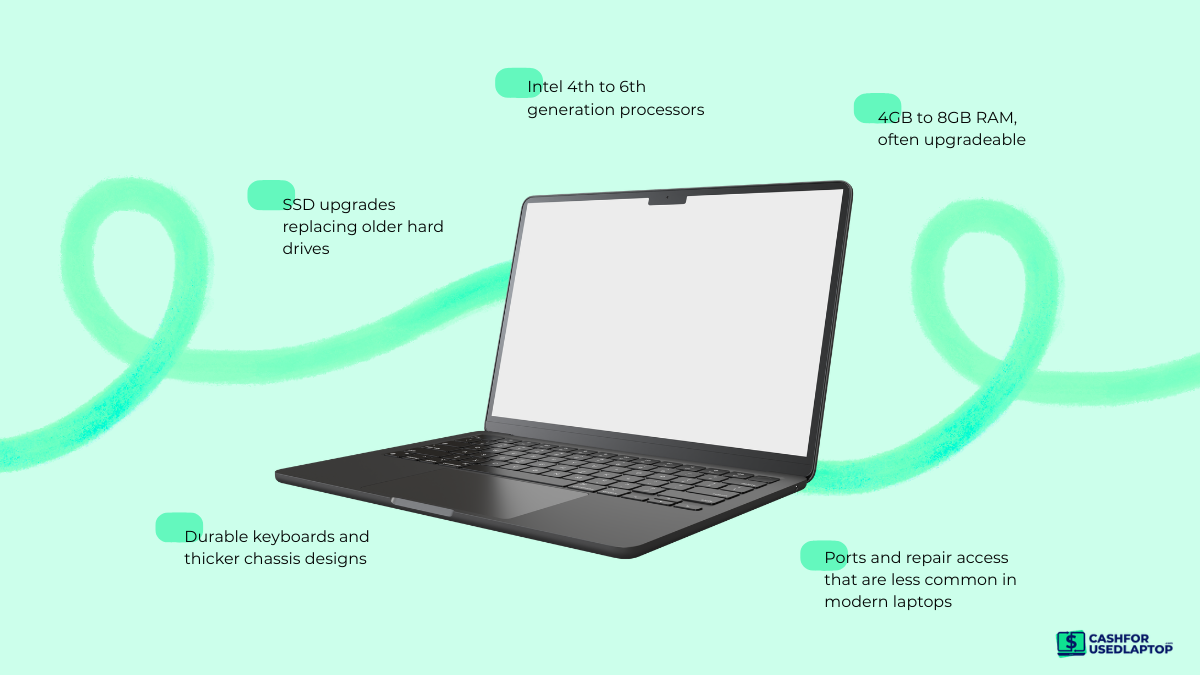
- Intel 4th to 6th generation processors
- 4GB to 8GB RAM, often upgradeable
- SSD upgrades replacing older hard drives
- Durable keyboards and thicker chassis designs
- Ports and repair access that are less common in modern laptops
They are not designed for heavy gaming or demanding creative workloads anymore. Still, for browsing, office work, streaming, and basic multitasking, many remain surprisingly usable. That practical usability is exactly why they continue circulating through resale and refurbishment markets instead of disappearing completely.
Old Laptops From a Decade Ago Still Sell Today: Here’s Why
10-year-old laptops still hold demand because they offer a low-cost way to handle everyday computing without major compromises. For many buyers, they represent the best time to sell or buy when budgets are tight but basic performance is enough. Their continued use is also supported by simple upgrades and the availability of refurbished units in the market.
Let’s look at the reasons why they’re still in demand.
1. Low Cost Makes Them Highly Accessible
This is the strongest reason these older machines still move in the market. Price sits at the centre of demand, especially for users who only need basic computing. Many buyers see used business laptops as a practical way to get reliable performance without spending on new hardware. In markets where budgets are tight, this gap becomes even more important.
These devices are commonly chosen by:
- Students managing limited budgets
- First-time laptop users
- Freelancers starting out
- Small shop owners or office users
The appeal is simple. A functional device at a fraction of the cost of a new one is often enough, even if it is older. For many users, performance benchmarks matter far less than whether the system can open a browser, run documents, and handle daily tasks without issues.
2. Sufficient Performance for Basic Tasks
Despite their age, many of these laptops still handle everyday work without major difficulty. This is because modern usage has shifted away from heavy local software to lighter, web-based tools. The factors affecting laptop longevity often become less noticeable when usage remains simple.
Typical tasks they still manage well:
- Web browsing and research
- Email and communication apps
- Streaming video content
- Word processing and spreadsheets
Since cloud services now handle much of the workload, older processors remain surprisingly usable. A decade ago, software demands were heavier on hardware. Today, the same tasks are often browser-based, reducing pressure on system performance and extending the practical life of older machines.
3. Easy and Cost-Effective Upgrades
One major reason these laptops stay relevant is how easily they can be improved. Even a small upgrade can significantly change the user experience. The most common improvement is replacing older hard drives with SSDs, which instantly boosts speed.
Typical upgrade options:
- SSD installation for faster boot and loading times
- RAM expansion for smoother multitasking
- Fresh operating system installation for better efficiency
These changes are low-cost but high-impact. Instead of buying a new device, users extend the lifespan of their current one. This upgrade-friendly nature is also why many sellers refurbish devices before resale, increasing their market value and usability.
4. Strong Build Quality in Older Business Models
Many older laptops that still sell today were originally designed for corporate environments. These machines were built for durability, not short product cycles. That is why they continue to function years after their release.
This segment of the market is often shaped by the depreciation curve of laptop brands, where business-class devices lose value more slowly than consumer models.
Common traits include:
- Reinforced chassis and hinges
- Spill-resistant keyboards in some models
- Better thermal design for long usage
- Higher durability standards overall
Brands like Lenovo ThinkPads and HP EliteBooks are still widely trusted because their physical build often outlasts their internal hardware relevance. This structural strength plays a major role in their continued resale value.
5. Secondary Use Cases Beyond Daily Computing
These laptops are not always bought for mainstream use. Many buyers repurpose them for specific technical or learning purposes. This extends their lifecycle far beyond typical office or personal use.
Common secondary uses include:
- Installing Linux for development or education
- Running home media servers
- Using the machines as coding practice
- Experimenting with cybersecurity tools
This is also where Gen Z prefers refurbished laptops, as younger users often look for affordable machines they can customize or experiment with. Instead of investing in expensive new systems, they use older laptops as flexible learning platforms. This shift in usage patterns keeps demand alive even when mainstream performance expectations decline.
6. Active Refurbishment and Resale Market
A structured resale ecosystem plays a major role in keeping these laptops in circulation. Many devices enter the market after corporate upgrades, where large batches are sold at once.
The process usually involves:
- Bulk purchase from companies
- Hardware cleaning and repair
- Software reinstallation
- Quality testing before resale
This system ensures buyers receive working machines rather than unverified used products. It also improves trust in the second-hand market. Because of this, older laptops remain consistently available, creating a steady supply that supports long-term resale activity.
7. Software Requirements Have Plateaued
One of the less obvious reasons these laptops still work is that software demands have not increased at the same pace as hardware upgrades. Most everyday tools now run in browsers or cloud platforms.
Examples include:
- Google Docs is replacing heavy office software
- Cloud storage reduces local processing needs
- Web-based communication tools are replacing desktop apps
This shift means older systems remain functional for general use. Many users no longer require high-end processors for basic tasks. Instead, internet speed and browser efficiency matter more than raw computing power, which keeps older laptops relevant for longer periods.
8. Buyers Accept Known Limitations
At a certain point, users understand what they are getting. Older laptops have clear limitations, but their low price often offsets those drawbacks. Knowing when to let go of a laptop is more about usage needs than age.
Common limitations include:
- Lack of support for newer operating systems
- Reduced battery life due to ageing cells
- Slower performance compared to modern devices
Even with these issues, many users continue using them because they still meet basic needs. The decision is often practical rather than technical. If the device can still perform essential tasks, replacement is not always necessary.
Why the Market Will Continue
The resale demand for older laptops is not just a leftover trend from past upgrades. It is being reinforced by how the global PC market is structuring itself. One clear factor is pricing pressure at the entry level. Even basic new laptops are no longer “cheap enough” for many users, which keeps older devices in active circulation. According to Gartner, worldwide PC shipments have also stabilized after years of fluctuation, showing a steady replacement cycle rather than rapid upgrades.
Another driver is behavioral change. Buyers are increasingly comfortable using refurbished electronics instead of new ones, especially for non-intensive work. This shift is particularly evident among younger users, where cost efficiency matters more than ownership of new hardware.
Key market forces:
- The rising entry cost of new laptops limiting first-time buyers
- Refurbishment pipelines stabilizing supply and quality
- Gradual normalization of second-hand tech usage
- Consistent demand for lightweight computing tasks
Sustainability also plays a quiet but growing role. Extending device life is becoming a practical decision, not just an ethical one, which keeps older machines economically relevant for longer cycles.
Conclusion: Old Laptops Still Have Real Value
10-year-old laptops continue to sell because they still meet real, everyday needs at a price people can manage. From basic computing to upgraded performance and strong second-hand demand, their usefulness does not disappear just with age. What changes is how they are used and who uses them. As long as affordability and simple functionality remain priorities, this market will stay active.
If you have an old laptop sitting unused, it may still hold value today. Instead of letting it lose more value over time, you can turn it into cash with CashForUsedLaptop and get a fair price while demand is still strong.