Why ITAD Is Becoming a Core Function of Enterprise Cybersecurity
Image Source: iStock/CARME PARRAMON
For years, enterprise cybersecurity has focused on what is live, connected, and actively in use. Firewalls, endpoint protection, access controls, and monitoring tools dominate the conversation. Yet one of the most exposed moments in an asset’s lifecycle often receives the least attention: when that device is retired, replaced, or quietly moved out of circulation.
Laptops, servers, storage drives, and mobile devices do not stop holding data simply because they are no longer deployed. When these assets leave day-to-day IT control, they often fall into a grey area between operations and security. That gap creates real risk. Sensitive data can remain recoverable, ownership becomes unclear, and accountability weakens.
However, IT asset disposition has started to change its role. What was once treated as a logistical or sustainability exercise is now being viewed through a security lens. As enterprises grow, decentralize, and refresh hardware more frequently, the way they retire and handle assets has become inseparable from how they protect data. Increasingly, ITAD is no longer optional. It is becoming a core part of enterprise cybersecurity strategy.
What ITAD Really Covers in a Modern Enterprise
IT Asset Disposition is still widely misunderstood. Many organizations treat it as a cleanup step at the end of a refresh cycle. In reality, modern ITAD is a structured control point in the asset lifecycle, with direct security and compliance impact.
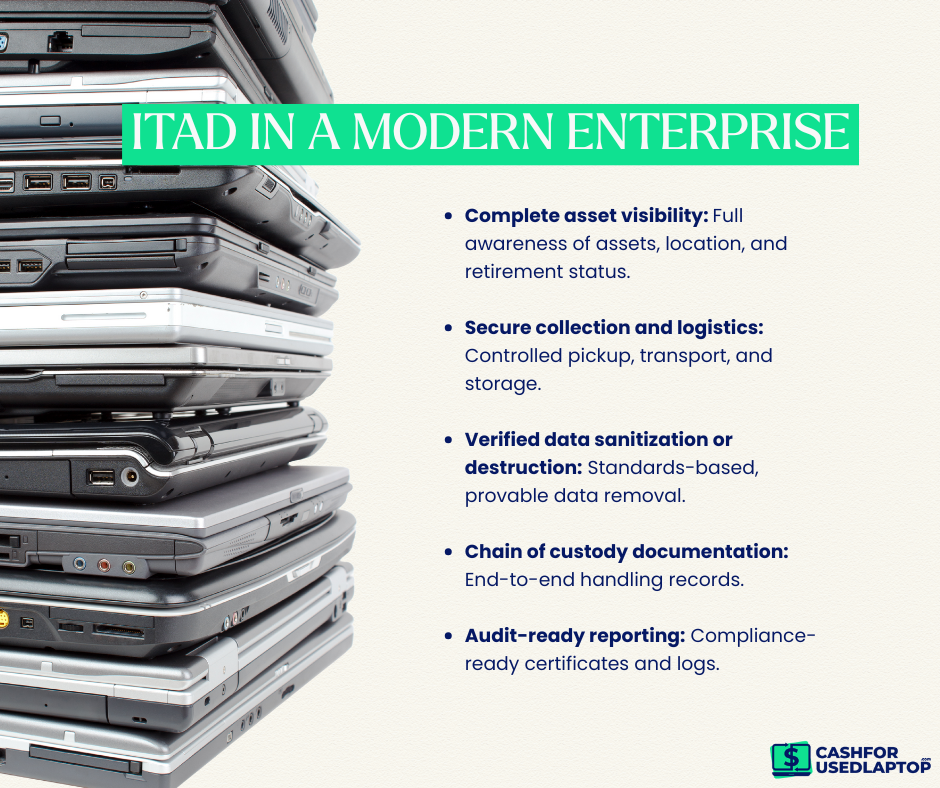
At a practical level, enterprise ITAD typically includes:
-
Complete asset visibility: Knowing what devices exist, where they are, and when they officially leave service.
-
Secure collection and logistics: Controlled pickup, transport, and storage to prevent assets from disappearing in transit.
-
Verified data sanitization or destruction: Data removal via deletion or destruction that follows recognized standards and can be proven later.
-
Chain of custody documentation: Clear records showing who handled the asset and when, from retirement to final disposition.
-
Audit-ready reporting: Certificates and logs that support compliance reviews, legal inquiries, and internal risk assessments.
What makes ITAD different today is not the individual steps, but how they connect teams. Security uses ITAD to reduce data exposure. Compliance relies on it to demonstrate control. Legal teams depend on it when questions arise months or years later.
When these pieces work together, ITAD stops being an afterthought and becomes a quiet but essential layer of enterprise security.
Key Reasons Why ITAD Has Become Essential to Modern Cybersecurity
As security programs mature, enterprises are starting to look beyond active systems and real-time threats. The focus is shifting toward lifecycle risk, especially the moments when devices fall out of regular use and controls begin to loosen. This is where ITAD plays a decisive role. When treated as a security function, not an operational task, ITAD helps close gaps that traditional cybersecurity tools were never designed to handle.
Below are the key reasons ITAD now sits squarely within modern cybersecurity strategy.
1. Data Breach Prevention Starts After a Device Is Retired
When you let go of a device, deleting files or resetting a device does not remove data in a meaningful way. On many storage devices, information remains recoverable long after it appears to be gone. That makes retired hardware an attractive target.
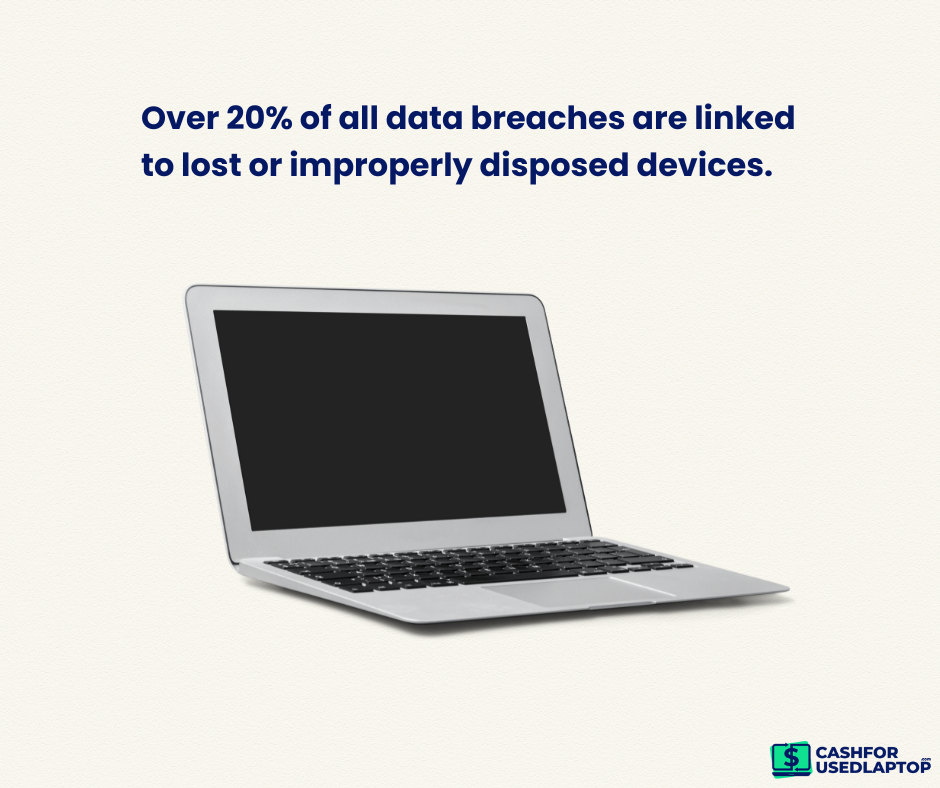
According to Verizon Data Breach Investigations Report, over 20% of all data breaches are linked to lost or improperly disposed devices. Professional ITAD addresses this risk directly by ensuring that data is either securely erased using recognized standards or the storage media is physically destroyed.
The goal is not just removal, but certainty. When done correctly, ITAD eliminates abandoned devices as an entry point for attackers seeking customer records, internal documents, or proprietary information.
2. Regulatory Compliance Leaves No Room for Guesswork
Data protection regulations are clear about one thing: sensitive information must be handled securely from start to finish. Laws such as GDPR, CCPA, and HIPAA extend responsibility well beyond active use of data.
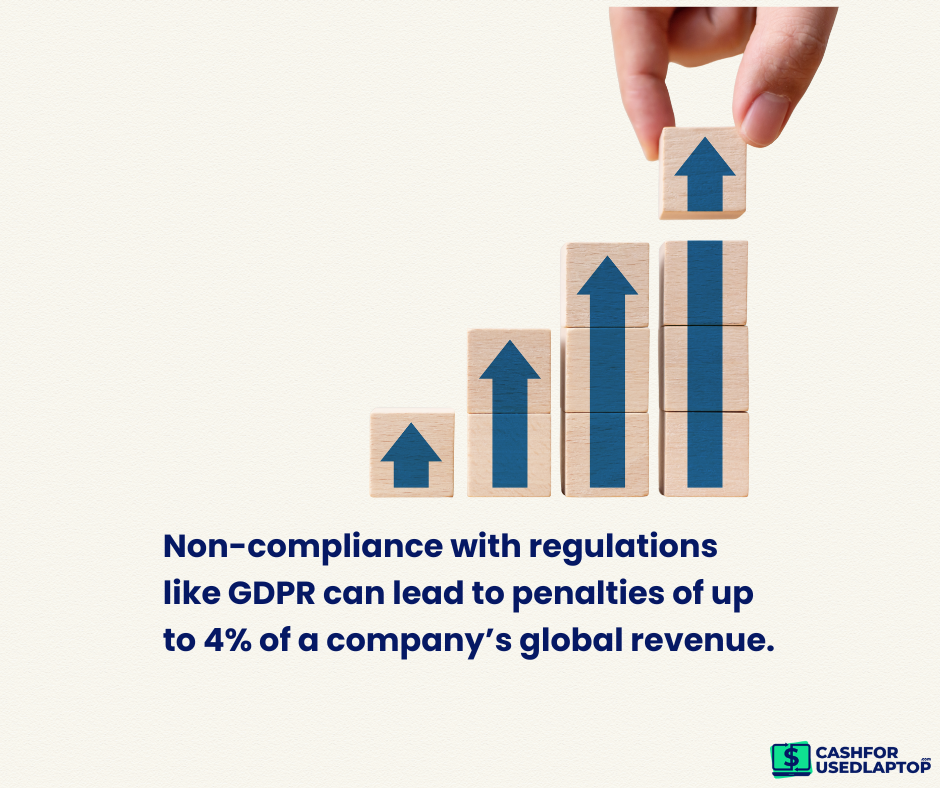
Improper disposal can trigger serious consequences, including fines, investigations, and legal action. For example, non-compliance with regulations like GDPR can lead to penalties of up to 4% of a company’s global revenue. Effective ITAD supports compliance by providing documented proof of secure data handling. This includes:
-
Verified data destruction processes
-
Certificates tied to specific assets
-
Clear timelines and accountability
These records often become critical during audits or regulatory reviews.
3. ITAD Strengthens Enterprise Risk Management
Cybersecurity risk does not end when a device reaches the end of its useful life. In fact, unmanaged hardware can introduce new vulnerabilities that are harder to detect.
Integrating ITAD into the security framework allows organizations to manage risk across the entire asset lifecycle. From procurement to retirement, every stage is accounted for. This proactive approach helps security teams identify weak points early and prevent obsolete devices from becoming blind spots that attackers can exploit.
4. Reputation Protection Depends on How You Handle Failure Points
Few events damage trust faster than a data breach tied to negligence. When customer or employee data is exposed as a consequence of abandonment or improper asset disposal, the impact goes beyond financial loss.
Strong ITAD practices signal responsibility and control. They show customers, partners, and regulators that the organization takes data protection seriously, even when systems are no longer in use. Over time, this consistency plays a quiet but powerful role in protecting brand reputation.
5. Supply Chain Security Extends Beyond Your Walls
Most enterprises rely on third-party ITAD providers. That makes vendor oversight a cybersecurity concern, not just a procurement decision.
Security-focused ITAD requires careful vetting, ongoing monitoring, and clear expectations around data handling. Without this, risk simply shifts outside the organization instead of being reduced. When ITAD partners follow the same security standards as internal teams, enterprises can maintain control even after assets leave their physical environment.
Together, these factors explain why ITAD is no longer optional. It has become a necessary layer in any serious cybersecurity strategy.
Choosing an ITAD Partner Through a Cybersecurity Lens
Once ITAD is recognized as a security function, the choice of partner becomes a risk decision, not a cost comparison. An ITAD vendor effectively inherits responsibility for sensitive data and physical assets. That makes due diligence essential. The right partner strengthens your security posture. The wrong one exposes the organization to unnecessary risk by ignoring data security at the most vulnerable point of the asset lifecycle.
Security-First Criteria Enterprises Should Evaluate
A credible ITAD partner should align with your security program, not operate alongside it. Key areas to evaluate include:
-
Documented data destruction standards: Clear alignment with recognized wiping and destruction frameworks, with processes that can be verified.
-
End-to-end chain of custody: Asset tracking from collection through final disposition, with no unexplained handoffs.
-
Physical and operational security: Secure facilities, controlled access, surveillance, and trained personnel handling assets.
-
Process consistency at scale: The ability to apply the same controls across locations, regions, and asset volumes.
-
Security ownership: A vendor that treats data protection as a core responsibility, not an optional service add-on.
Transparency, Certifications, and Reporting Expectations
Transparency is what turns promises into proof. Enterprises should expect clear, timely reporting that stands up to audit and scrutiny.
Look for partners that provide:
-
Recognized industry certifications tied to data handling and security
-
Asset-level reporting rather than high-level summaries
-
Certificates of data destruction linked to serial numbers
-
Retention of records that match regulatory and legal requirements
If a vendor cannot explain how data is destroyed, tracked, and documented, that uncertainty becomes your risk.
Common Red Flags in ITAD Vendors
Certain warning signs tend to surface early and should not be ignored:
-
Vague descriptions of data sanitization methods
-
Limited or delayed reporting after asset pickup
-
Outsourcing critical steps without clear disclosure
-
Weak answers to security or compliance questions
-
Pricing that seems disconnected from process depth or accountability
A strong ITAD partner is comfortable being examined. In cybersecurity, reluctance to provide details is rarely accidental.
Conclusion: The Future of ITAD in Enterprise Security Strategy
As cybersecurity programs mature, ITAD is no longer something that can sit on the sidelines. Data risk does not end when a device is retired. It simply becomes easier to overlook. Enterprises are now treating asset disposition as a security control that deserves the same attention as access management or endpoint protection.
Going forward, ITAD will be more closely aligned with asset management, compliance, and security oversight. Ownership will continue to shift toward security leadership, where decisions are driven by risk rather than convenience. Organizations that build ITAD into their core security strategy close a critical gap—those who do not leave one of their most exposed moments unmanaged.
Working with a trusted ITAD partner turns strategy into action. The right provider ensures secure data destruction, compliance, and responsible recycling while protecting sensitive information and supporting your organization’s values.