Why Schools Increasingly Rely on Refurbished Technology

Walk into almost any classroom today, and you will see screens where textbooks once dominated. Assignments are submitted online, lessons are shared through portals, and even basic research starts on a browser. The shift has been steady, but it has also raised a practical question for schools. How do you keep up with growing tech demands without stretching already tight budgets?
This is where refurbished technology has started to make quiet but meaningful inroads. Instead of chasing the latest devices each year, many schools are turning to refurbished laptops as a way to balance cost with access. It is a sensible choice that keeps classrooms running without constant financial strain.
So, What Is Refurbished Technology?
Refurbished technology refers to devices that have been previously used but restored to full working condition. Unlike new devices, these laptops, tablets, or desktops have gone through thorough testing, repairs, and quality checks to ensure reliability. They may have minor cosmetic marks, but their performance meets modern classroom needs.
For schools, refurbished devices are a way to turn tech trash into treasure. Devices that might otherwise be discarded are given a second life, delivering full functionality at a fraction of the cost of new equipment. This approach supports both affordability and sustainability, allowing schools to equip students with reliable devices while reducing electronic waste. It’s a practical strategy that balances budgets, access, and environmental responsibility.
The Growing Need for Affordable Laptops in Education
The demand for laptops in education is no longer optional. It has become part of how students learn, submit work, and stay connected to their coursework. The numbers reflect this shift quite clearly.
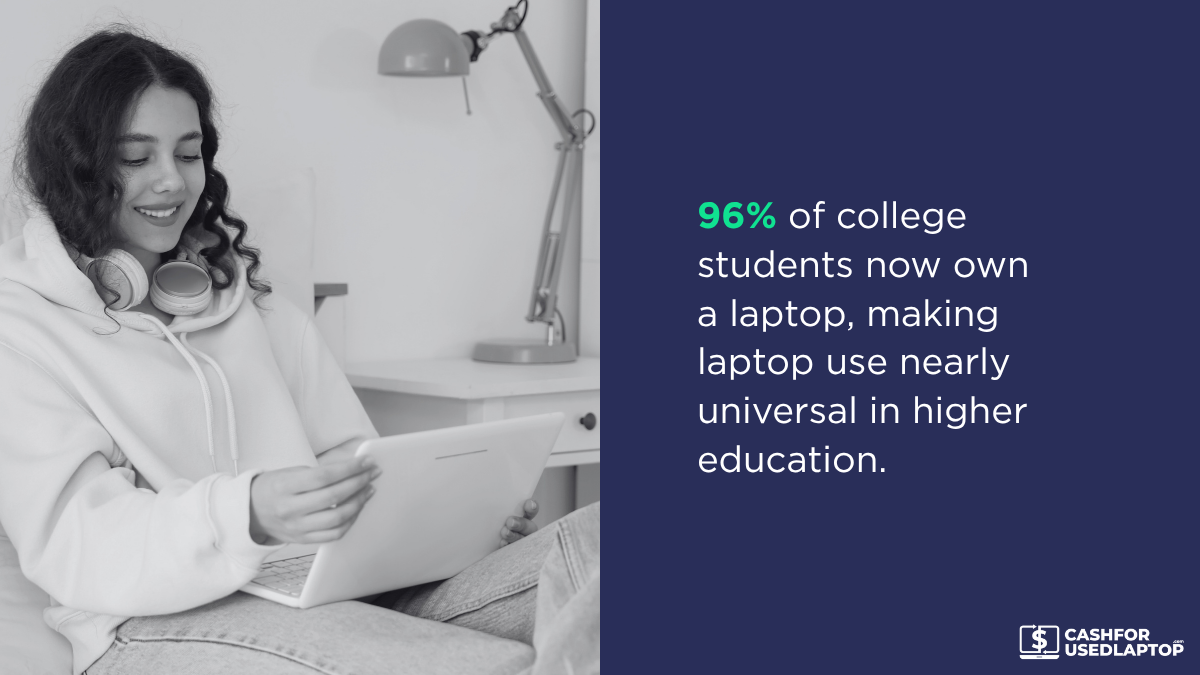
Recent data shows that laptop use among students is nearly universal in higher education, with ownership rates reaching 96% in some surveys.
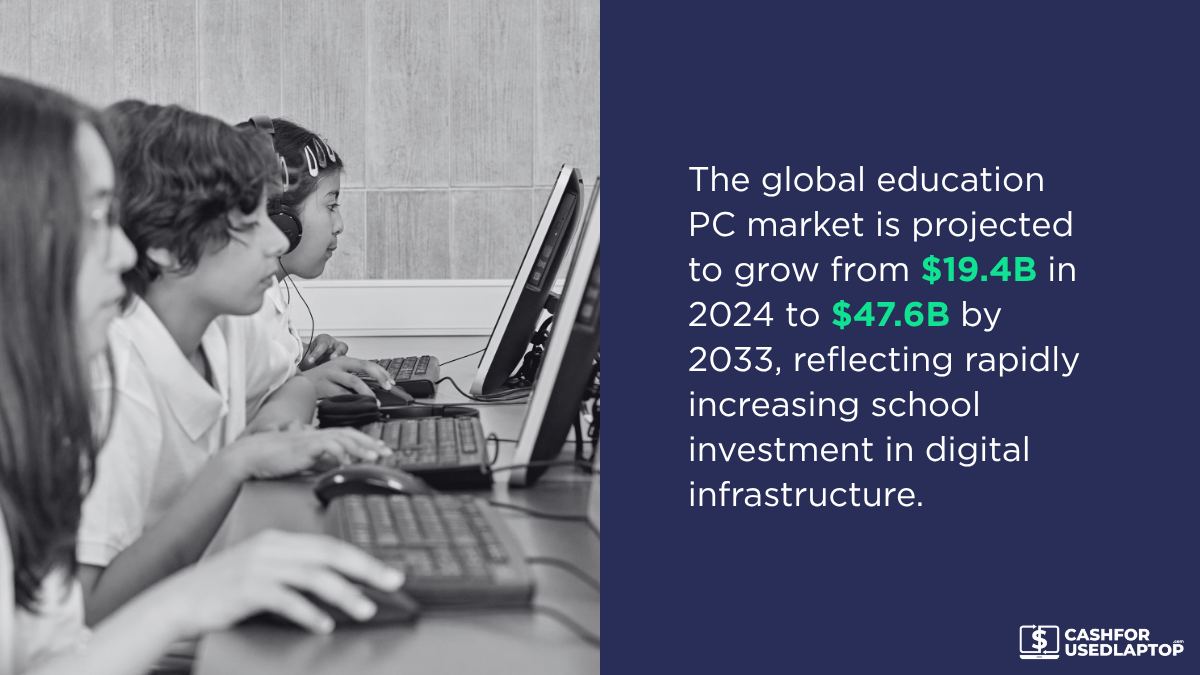
At the same time, schools themselves are investing heavily in digital infrastructure, with the global education PC market projected to grow from $19.4 billion in 2024 to $47.6 billion by 2033.
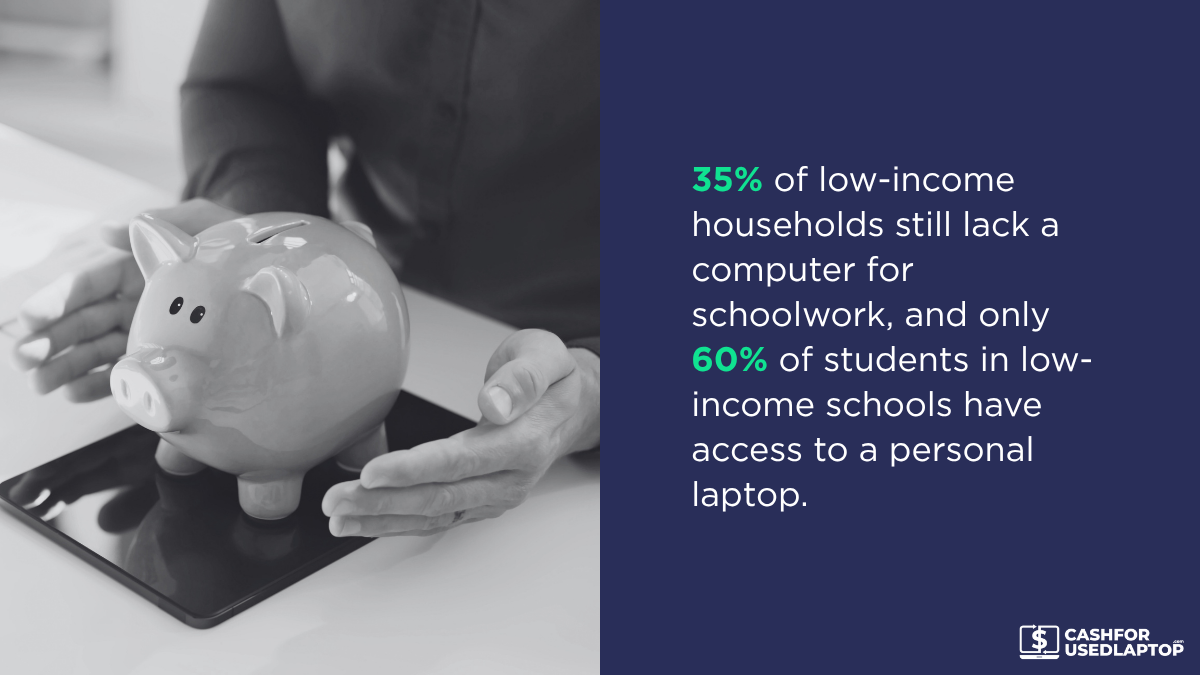
Yet access remains uneven. Around 35% of low-income households still do not have a computer for schoolwork, and only 60% of students in low-income schools have access to a personal laptop. This gap places schools in a difficult position. They are expected to deliver digital learning, but many students depend entirely on school-provided devices.
For administrators, the challenge is not just providing laptops. It is providing enough of them, maintaining them, and replacing them over time. Buying new devices at scale quickly becomes expensive. That pressure is one of the main reasons refurbished laptops are no longer seen as a backup option. They are becoming part of the primary strategy.
Key Benefits Driving Schools Toward Refurbished Laptops at Scale
As digital learning becomes part of everyday classroom life, schools are rethinking how they invest in technology. The move toward refurbished laptops in education reflects a broader shift in practicality, accessibility, and smarter use of resources. For many institutions, these devices are proving to be the best laptops for students when real classroom needs are considered.
1. Significant Cost Reduction That Scales Across Entire Institutions
Refurbished laptops typically cost 30 to 50 percent less than new models, making a measurable difference when schools buy in bulk. For a single classroom, the savings may seem modest. Across an entire school system, however, it can mean the difference between limited access and full device coverage.
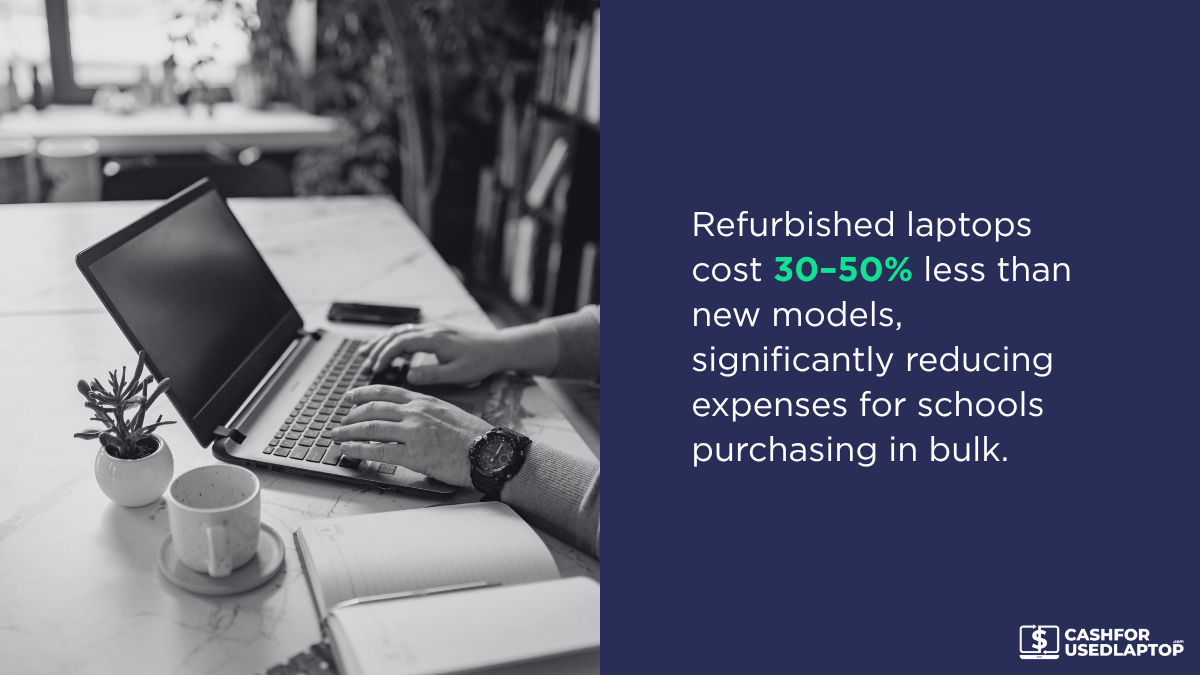
This cost advantage allows schools to invest in more than just hardware. Funds can be redirected toward teacher training, software licenses, or improving internet infrastructure. In large-scale education systems, affordability plays a decisive role. In the United States, for example, schools collectively spend over $26 billion annually on education technology, making cost-efficient purchasing strategies essential for sustaining long-term digital programs.
2. Expanding Access and Closing the Digital Divide
Access to a personal device directly shapes how students learn. Without it, participation becomes limited, especially as assignments, research, and communication move online. During global school closures, an estimated 463 million children were unable to access remote learning due to a lack of devices and connectivity.
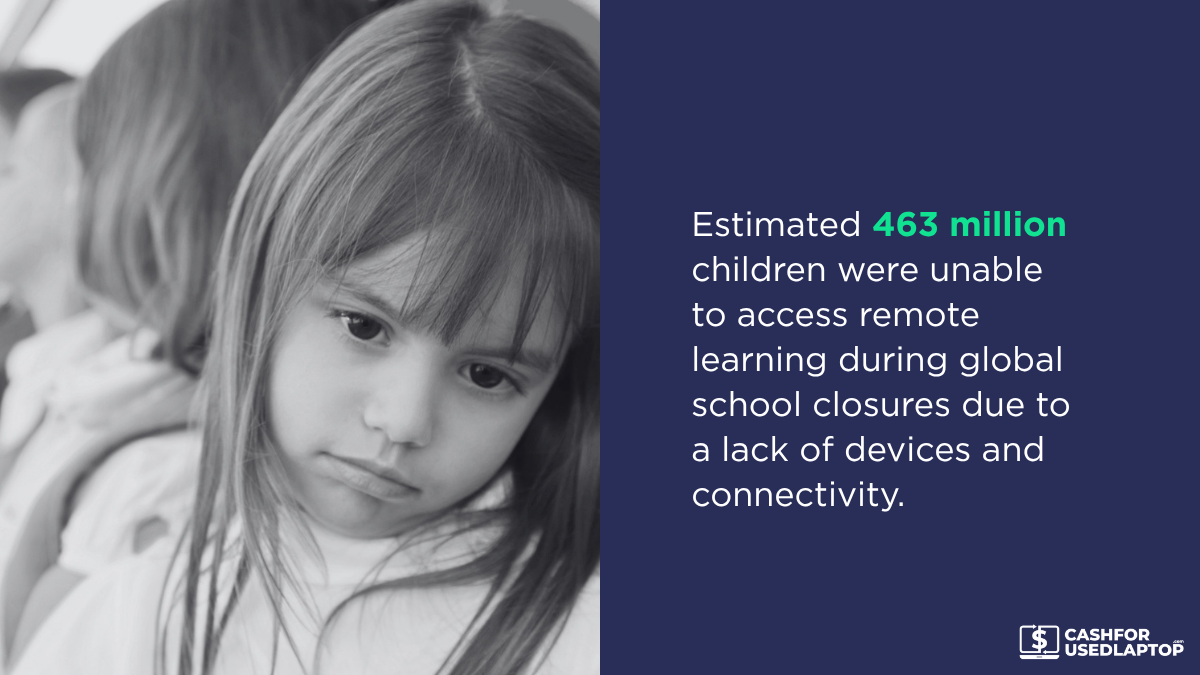
Refurbished laptops help schools close this gap in a practical way. Instead of restricting device use to labs or shared spaces, students gain more consistent access. This supports independent learning and reduces inequality between those who have devices at home and those who do not.
3. Practical Performance That Matches Real Classroom Needs
There is a tendency to equate learning with high-end technology, but most schoolwork does not require advanced specifications. Tasks such as writing assignments, attending virtual classes, and using browser-based tools run well on properly restored machines.
This is where refurbished devices stand out. They focus on usability rather than excess. In many cases, they offer exactly what students need without unnecessary features. For schools choosing laptops, the priority is reliability and consistency, not premium performance that goes unused.
4. Supporting Sustainability Through Extended Device Lifecycles
Educational institutions are under growing pressure to reduce waste and adopt more responsible practices. Refurbishment supports this by helping schools extend the life of their laptops rather than replacing devices prematurely.
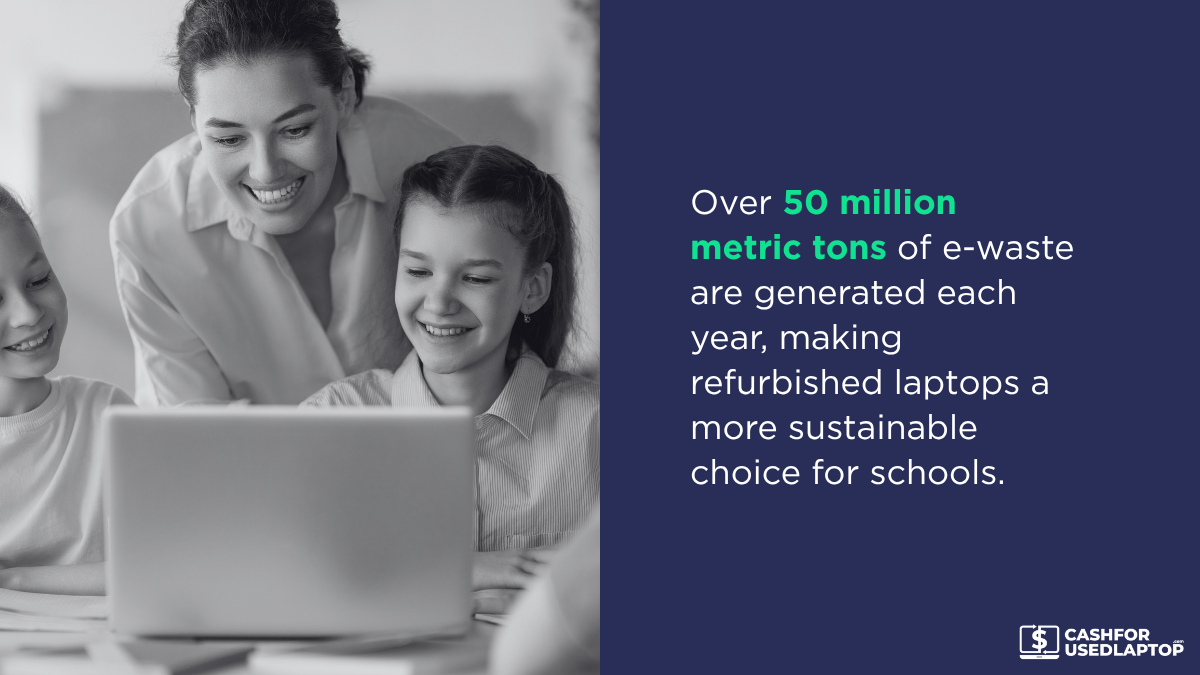
Electronic waste is a rising global concern, with over 50 million metric tons generated each year.
By choosing refurbished laptops, schools reduce their environmental impact while still meeting technological needs. This approach focuses on shifting from constant upgrading to making better use of existing resources.
5. Faster Deployment and Easier Scaling of Device Programs
When schools need devices, they often need them quickly. Refurbished laptops are usually available in bulk and can be deployed faster than new units, which may be delayed by supply chain constraints.
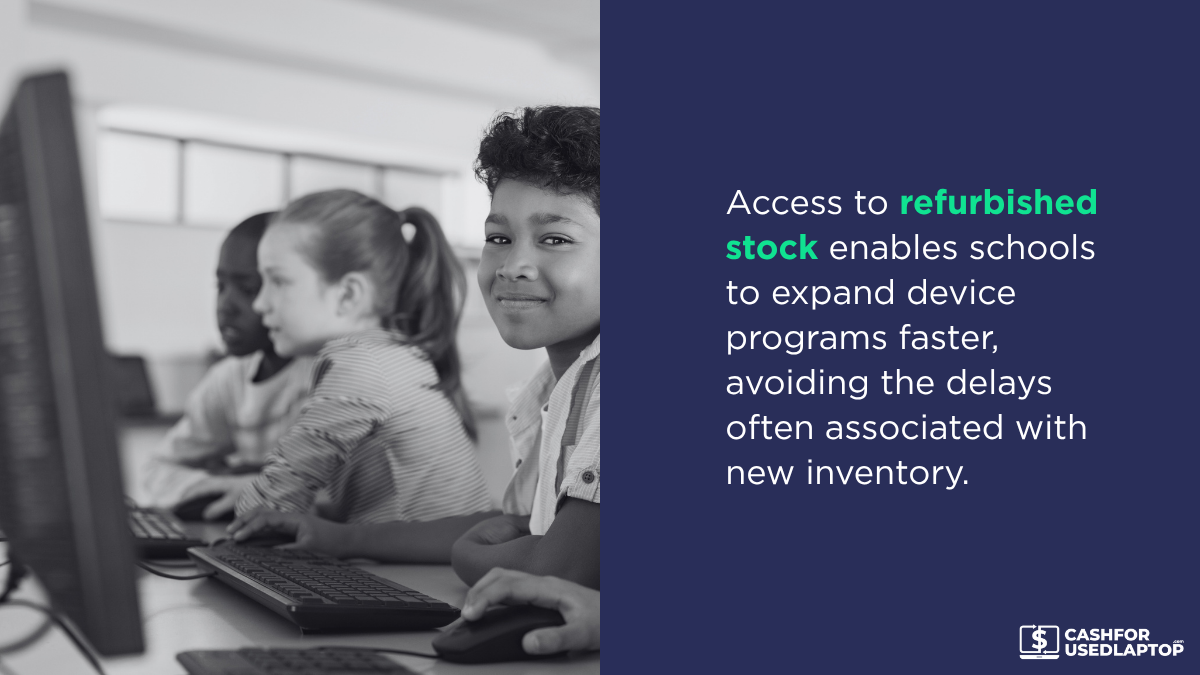
This flexibility became especially important during the shift to remote learning, when institutions had to respond without long planning cycles. Access to ready-to-use refurbished stock allowed many schools to expand their device programs without waiting months for new inventory.
6. A Smarter, More Sustainable Approach to Technology Investment
Beyond immediate benefits, refurbished laptops support a more stable long-term strategy. Schools can replace or upgrade devices more frequently without major financial strain, creating a cycle that is easier to manage.
This approach reflects a wider move toward tech minimalism, where the goal is not to own the newest technology, but to use what is necessary, efficiently and responsibly. For schools, this means focusing on access, function, and longevity rather than constant replacement.
Case Studies: How Refurbished Tech Is Making a Difference in Schools
Let’s look at some real-world examples that show how refurbished technology is helping schools improve access, close digital gaps, and give students the tools they need for learning.
1. AT&T and Human-I-T Bring Refurbished Laptops to Students in Texas
At Plainview Classical Academy (PCA) in Texas, a partnership between AT&T and the nonprofit Human‑I‑T provided 65 refurbished Dell laptops to students who lacked personal devices. These were distributed at a school assembly to students selected by lottery, targeting those without access to computers at home. The initiative was part of a broader effort known as the Connected Learning program, aimed at reducing the digital divide in underserved communities.
This case highlights how refurbished devices can be deployed quickly to meet real needs. For PCA, where federal funding was limited, the donation gave many students their first reliable way to participate fully in online coursework. Teachers reported that having personal laptops led to higher engagement during lessons and smoother assignment submissions. Administrators noted that even a small number of devices made daily planning easier, since students no longer had to share limited lab computers.
2. A School District Expands Access with Refurbished MacBooks
In a suburban school district in the United States, administrators faced a familiar challenge: how to give every student reliable access to a laptop without exceeding strict budget limits. The answer came through a decision to purchase refurbished MacBooks instead of new machines. By choosing refurbished devices, the district was able to nearly double the number of laptops it could afford within the same funding envelope.
According to the district’s technology director, this approach delivered what he called “the best of both worlds.” The students received high‑quality machines that met classroom needs, and the budget stretched far enough to ensure wider distribution. Instead of equipping only a portion of students with new laptops, the district provided a device for nearly every learner. Teachers reported smoother lesson planning, fewer resource bottlenecks, and better consistency in tech use across grades — outcomes that would have been harder to achieve if the budget had been spent on new units alone.
3. Kramden Institute’s Tech Scholars Program
In North Carolina, USA, the Kramden Institute has spent more than two decades turning refurbished devices into meaningful opportunities for students. Since 2003, the nonprofit has distributed refurbished computers to over 44,000 students, helping learners from low‑income families gain reliable access to technology they might not otherwise afford.
One of the institute’s core initiatives is the Tech Scholars program, which supports high‑achieving students facing financial barriers. Instead of simply giving machines to anyone who asks, this program prioritizes students who are doing well in school but lack the tools to learn as effectively at home. Participants receive a professionally restored laptop along with training on basic tech skills. Teachers and parents report that these devices make a real difference in homework completion, research ability, and overall confidence with technology. For many students, the program does more than supply a laptop; it expands what’s possible in their education.
4. Camara Education’s Impact in Ethiopia
Camara Education is an international nonprofit focused on using technology to support learning in underserved regions. In Ethiopia, the organization has deployed over 100,000 refurbished computers into schools as part of its broader mission to improve digital literacy and classroom access. According to Camara’s impact report, these efforts have reached more than 2 million students, many of whom had little or no access to technology before.
The initiative works by refurbishing donated machines and installing them in school computer labs, often paired with teacher training and local support. Educators in participating schools have reported that students are more engaged and confident when they can interact directly with technology rather than just observe. For students learning to type, conducting research, and using basic software tools, these devices have become a practical bridge to the digital skills increasingly required for higher education and employment.
Conclusion: Make Technology Work for Schools and Students
Refurbished laptops are a budget-friendly solution and a practical way for schools to provide equitable access, improve learning outcomes, and support sustainability. From bridging the digital divide to expanding access to devices, giving previously used technology a second life delivers measurable benefits.
If your old devices are gathering dust, don’t let them go to waste. Sell your used tech to CashForUsedLaptop and help schools turn tech trash into treasure while getting value from equipment you no longer need.