How Corporate Buyback Programs Give Laptops a Second Life
Published on
A business laptop rarely dies. It gets retired.
One day it’s the machine someone runs their whole job on. The next, a shinier model lands on the desk, and the old one gets boxed up, shoved on a shelf, and forgotten, even though it still works fine. That moment, the one where a perfectly good laptop gets labeled "old," is where most of the waste starts.
Corporate buyback programs exist to undo it. For organizations managing large device refreshes, a structured corporate laptop buyback strategy can help recover value while keeping retired hardware in circulation.
Rather than letting retired fleets collect dust or be dumped, companies feed them into a system that wipes them clean, repairs them, and passes them on to someone new.
And the laptop one business shrugged off as outdated is usually exactly what a student, a startup, or a remote worker has been hunting for.
Below, we’ll get into what these programs actually are, why companies bother with them, how a retired laptop earns its second life, which brands run their own programs, and what all of it means for the planet.
What a Corporate Buyback Program Actually Is?
It’s pretty much what it sounds like. A company is done with its laptops, so instead of stashing or trashing them, it sells the batch back through a proper program.
Sometimes the brand that built the laptop runs that program. Other times it’s a specialist buyer who’ll take the whole fleet off your hands in one go.
The real draw is that someone else deals with the headache. No business wants to list 200 laptops one at a time and field 200 different buyers, each haggling over a charger.
You hand over the batch, the devices get checked, and you get paid for what they’re worth. The annoying part of selling used tech lands on someone who does it every single day.
For bigger fleets, this usually runs through a bulk laptop sale, where hundreds of machines move together instead of dribbling out one by one.
Why Companies Choose Buyback Over the Storeroom?
Money is the first reason, but it’s honestly not the only one. Three things tend to tip the scales.
Start with the obvious: recovering value. Laptops lose value quickly, and every month one sits unused is cash quietly leaking out the door.
A device worth a fair bit during a refresh cycle can be worth a fraction of that two years on. This decline follows a predictable pattern, which is why understanding laptop depreciation and resale value helps businesses time their refresh cycles more effectively. Buyback lets a company cash out while there’s still something left to cash out.
Then there’s data security, which keeps a lot of IT managers up at night. Old work laptops are stuffed with sensitive stuff, like client files, internal reports, saved logins, and employee records.
Good buyback programs treat wiping that data as step one, not a box to tick later. IT teams get a documented, accountable way to clear every device before it leaves the building.
The third reason is sustainability, and it’s gone from nice-to-have to genuinely important. Companies report on their environmental impact now, and quietly binning a pile of electronics is not a great look.
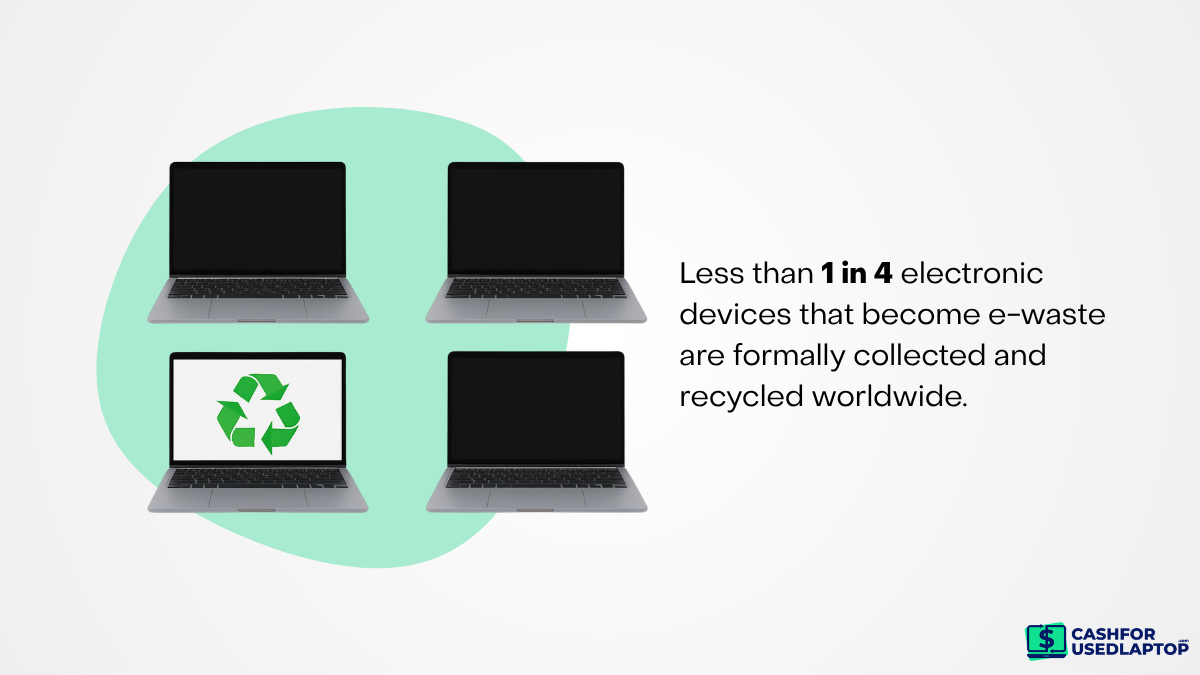
Reuse tells a much better story, and the numbers agree. The UN’s Global E-waste Monitor 2024 found that only about 22.3% of the world’s electronic waste was formally collected and recycled in 2022.
Keeping a working laptop in circulation is one of the easiest ways for a business to stay out of that grim statistic.
Buyback vs. Storage: A Quick Decision Guide.
|
Situation |
Choose Buyback When… |
Why It Makes Sense |
|
Recovering Asset Value |
Devices are no longer needed and still have resale value. |
Laptops depreciate quickly. Selling them sooner helps recover value before prices drop further. |
|
Avoiding Idle Inventory |
Equipment has been sitting unused for months with no planned redeployment. |
Unused devices tie up capital and continue losing value while stored. |
|
Data Security Concerns |
Devices contain company data, employee records, client information, or saved credentials. |
Reputable buyback programs include secure data wiping and documentation, reducing security risks. |
|
IT Asset Refreshes |
The organization is replacing laptops as part of a scheduled hardware refresh. |
Buyback provides an efficient way to dispose of old equipment while generating return on retired assets. |
|
Sustainability Goals |
The company wants to reduce e-waste and support ESG or sustainability initiatives. |
Extending a device’s life through reuse is more sustainable than storing or discarding it. |
|
Limited Storage Space |
IT storerooms are filling up with obsolete hardware. |
Buyback frees up physical space and eliminates the burden of managing unused inventory. |
|
Compliance and Auditing |
The organization needs a documented disposal process. |
Buyback providers often offer asset tracking, data-erasure certificates, and audit trails. |
|
No Future Internal Use |
There is little chance the devices will be redeployed to employees. |
Keeping hardware "just in case" often leads to long-term storage and further depreciation. |
What "Second Life" Actually Looks Like
A laptop doesn’t just get wiped and relisted. There’s a bit of work between retirement and resale.
The data gets erased properly first, not with a quick factory reset that leaves files lurking. Then the machine gets inspected and tested, with someone running through the battery, storage, screen, keyboard, and ports.
After that, it usually takes one of a few routes:
- Refurbished and resold to a new buyer, often a student, freelancer, or small business after solid hardware without the new-laptop price tag
- Lightly repaired first, maybe a fresh battery or SSD to bring it back up to scratch
- Stripped for parts if it’s genuinely past saving, so the good bits keep other laptops alive
- Responsibly recycled only when reuse really isn’t on the table
Reuse comes first. Recycling is the fallback, not the default.
If you’ve ever wondered which makes more sense, the gap between laptop resale and recycling really comes down to wringing every last bit of use out of a device before you break it down for scrap.
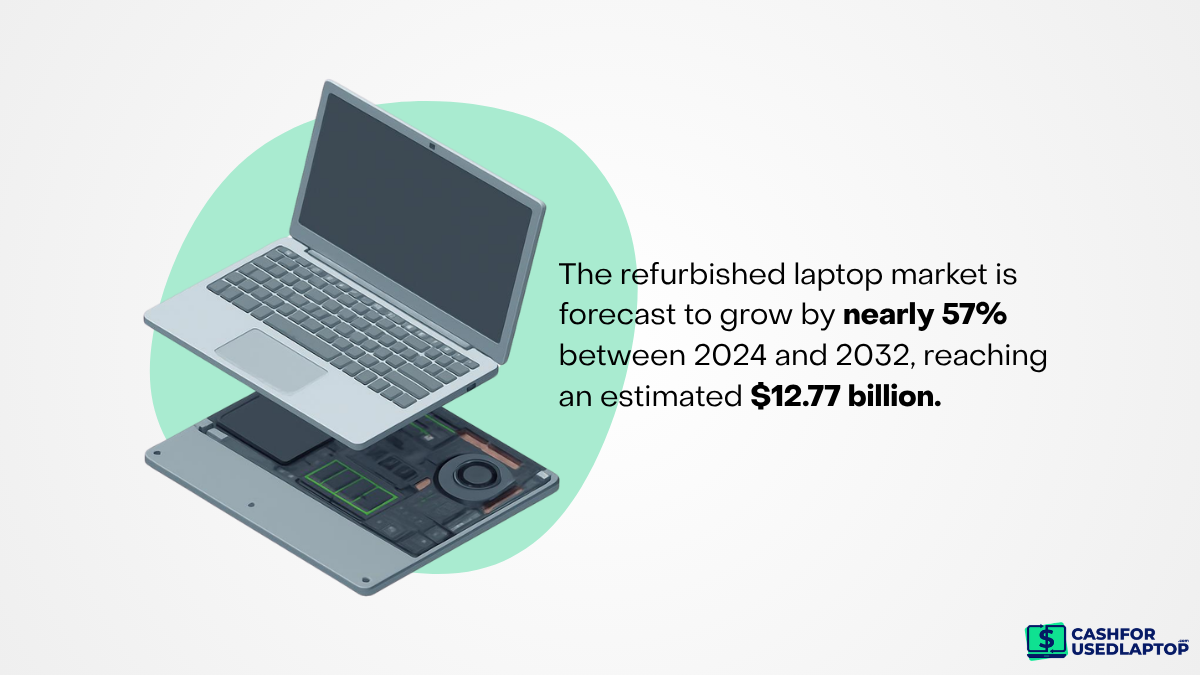
And there’s a real crowd waiting on the other side. The global refurbished laptop market was worth around $8.13 billion in 2024 and is on track to hit roughly $12.77 billion by 2032, per Credence Research.
A big chunk of that demand comes from schools, which is exactly why so many lean on refurbished tech to make tight budgets stretch further.
The Brands Running Their Own Programs
A lot of the big manufacturers built buyback programs of their own. Partly because business customers kept asking, and partly because it quietly feeds their own refurbished sales channels.
Here’s how some of the major players handle it:
|
Brand |
Program |
What happens to the device |
|
Dell |
Asset Recovery Services + Dell Outlet |
Takes back business equipment, then resells certified refurbished machines |
|
HP |
Device recovery & renewal programs |
Recovers and renews business fleets for resale |
|
Lenovo |
Asset Recovery Services + Certified Refurbished |
Handles corporate returns and resells durable models like ThinkPads |
|
Apple |
Apple Trade In |
Gives credit for returned MacBooks; devices are resold or recycled |
|
Microsoft |
Surface trade-in + registered refurbishers |
Trade-in credit, then resold through a refurbisher network |
|
Back Market / Amazon Renewed |
Resale marketplaces |
Sell second-life devices straight to shoppers |
Giving laptops a second life isn’t some fringe idea anymore. Some of the biggest names in tech have wired it into how they operate, and steady demand for used business laptops keeps proving them right.
Why Reuse Is Such a Big Environmental Win
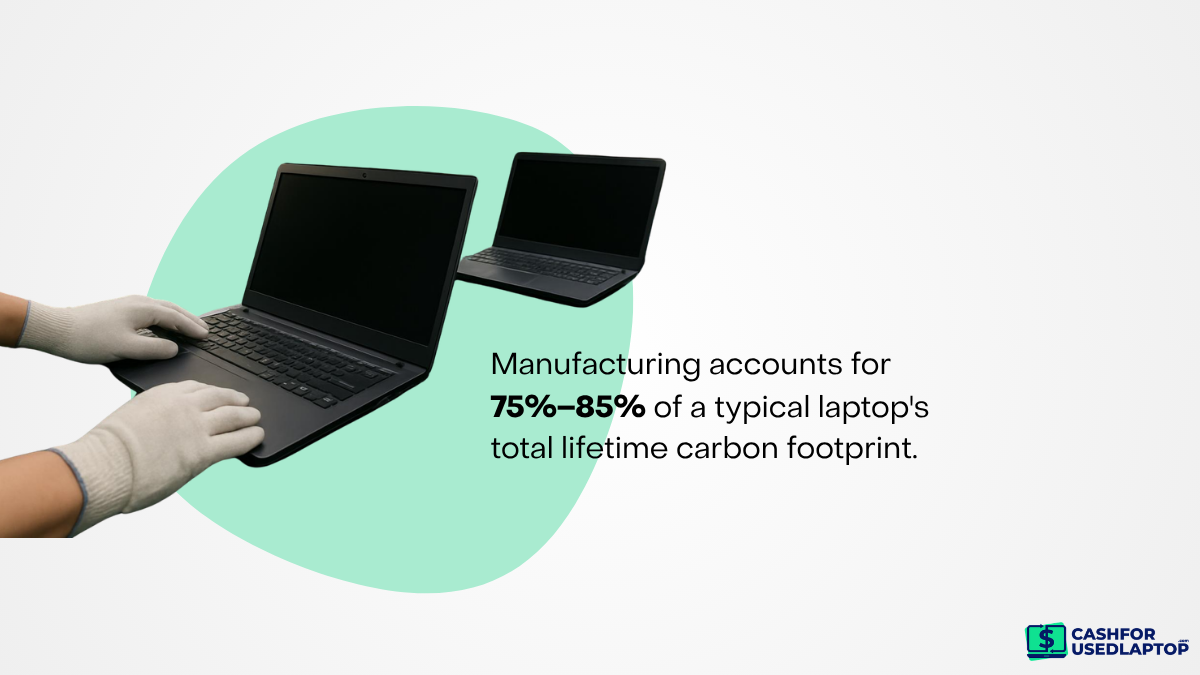
This is the number that changes how you look at the whole thing. For a typical laptop, manufacturing accounts for somewhere between 75% and 85% of its entire lifetime carbon footprint, according to Circular Computing.
The electricity it sips while you’re actually working on it? A small slice. Most of the damage was done before the thing ever shipped from the factory.
You can see it in the manufacturers’ own figures. Dell’s lifecycle assessment for the XPS 13 9310 pins about 81% of its total emissions on manufacturing alone.
So when a buyback program keeps that laptop going for another few years instead of nudging someone toward a brand-new one, it sidesteps most of that upfront carbon hit.
Recycling recovers materials, and that’s worth doing. But it still means a new machine has to be built somewhere. Stretching the life of one that already exists skips the dirtiest part of the whole process.
Where Smaller Businesses Fit In
Not everyone has Dell’s scale or a contract with a global asset recovery firm. A 30-person agency swapping out a dozen laptops doesn’t need an enterprise setup.
But those dozen machines are still worth real money, and they still hold sensitive data.
That’s where third-party buyback services come in. They cover the same essentials, like fair valuation, secure wiping, free shipping, and quick payment, without needing a warehouse full of devices to qualify.
For a smaller team weighing it up, it often boils down to a laptop trade-in versus cash for laptop call. Store credit toward the next purchase, or actual cash in hand?
Either way, the device stays out of a drawer and ends up with a second owner.
Conclusion
Corporate buyback programs took a dead end- that pile of retired laptops nobody knew what to do with- and turned it into a fresh start.
The company gets paid and clears its data safely. The next owner gets capable hardware without paying full price. And the planet dodges the heavy carbon cost of yet another machine built from scratch.
It’s not often the money, the convenience, and the environmental side all point the same way, but here they do.
A laptop that’s wrapped up one chapter at a company isn’t really finished. It just needs a nudge toward the next one.
If you’ve got old devices gathering dust, you don’t need an enterprise contract to put them back to work. You can sell your used laptops with CashForUsedLaptop and give them a proper second life.