What Can Go Wrong When Selling Your Laptop—and Why It Often Does
Selling a laptop is often treated as a quick win—something you list, negotiate, and close within a day or two. It feels transactional and almost routine. That’s exactly where the risk begins.
Because in most cases, nothing about the interaction signals a problem. The buyer sounds normal. The payment looks legitimate, and the process follows a familiar pattern. But that familiarity creates a false sense of control, one where verification is assumed rather than confirmed.
Digital marketplaces have made selling faster, but they’ve also reduced the friction that once helped filter out bad actors. What’s left is an environment where trust is often extended before it’s earned.
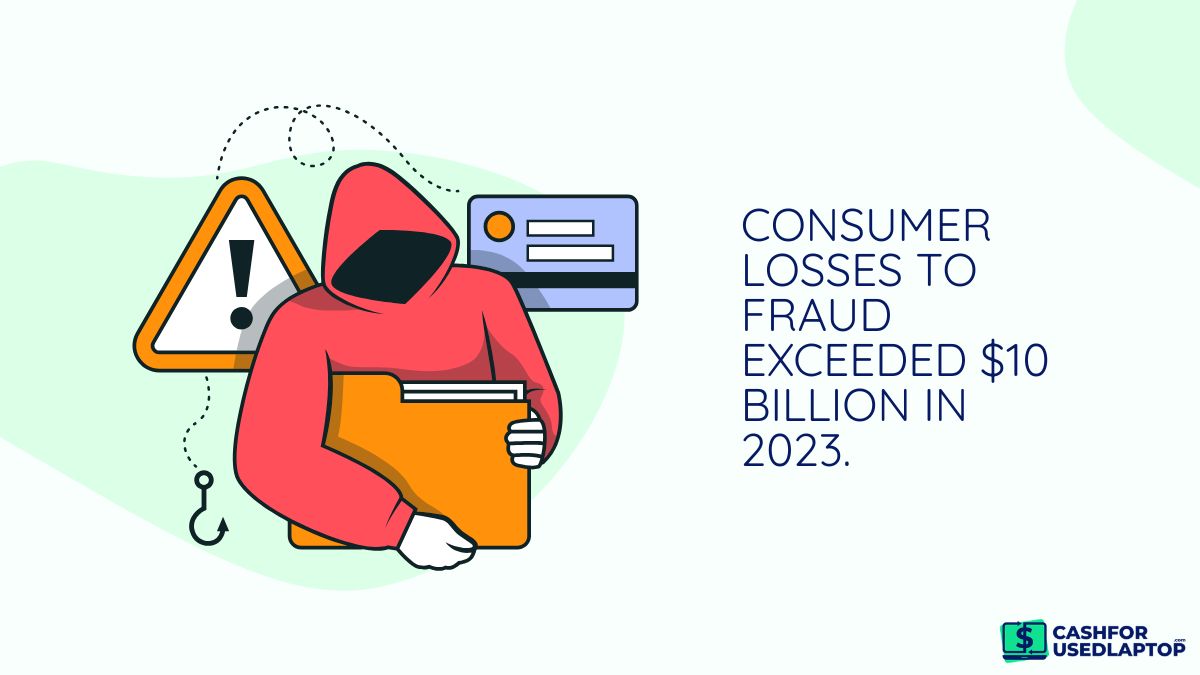
The scale of that shift is impossible to ignore. Consumer losses to fraud exceeded $10 billion in 2023, according to the Federal Trade Commission. Transactions that initially seemed legitimate drove these losses.
What looks simple on the surface is rarely that contained underneath. So, what should one do to sell a laptop online safely—without exposing themselves to these risks? This guide covers the topic thoroughly.
Let’s get into it.
Where Laptop Sales Go Wrong — The Trust Gap in Peer-to-Peer Selling
In most peer-to-peer marketplaces, the scams follow a familiar pattern and often go unnoticed. Once a buyer reaches out, the interaction is largely self-managed and there are no verification checks.
In some cases, the exchange moves off-platform altogether, where there’s less visibility and fewer safeguards. At that point, the transaction depends almost entirely on what each side chooses to trust.
According to the Better Business Bureau, online purchase scams are among the most commonly reported types of fraud, frequently involving high-demand items like electronics.
Laptops tend to attract more fraudulent interest because of their resale value and portability, making them easier to resell quickly compared to many other items.
The Most Common Laptop Resale Scams Sellers Encounter
The fact that none of these scams feel like scams at first is part of the misdirection. Nothing stands out. Not at first. By the time a discrepancy is detected, the transaction is already underway. These scams are effective because they closely mirror legitimate buying behavior.
Let’s have a look at some of these encounters:
1. Fake Payment Confirmations
A payment appears to come through for the laptop. A screenshot is shared, and sometimes an email follows, formatted to look official. The amount matches the agreed price for the laptop, often including specifics like the model or condition, and the buyer is waiting for confirmation.
But nothing has actually settled.
Screenshots can be edited, and confirmation messages can be replicated. Before handing over the device, it also helps to clear your laptop before selling it, ensuring both payment and data are handled properly.
The interaction feels complete, but the transaction does not.
The only check that is held is in your account. Not what’s shared. What’s actually there. When selling a laptop, this is one of the easiest scams to miss.
2. Chargeback & Reversal Scams
Some transactions don’t fail immediately. They unwind later. A payment is received through a legitimate channel. The balance updates. The sale moves forward. From the seller’s side, everything is in place.
Then the reversal is filed.
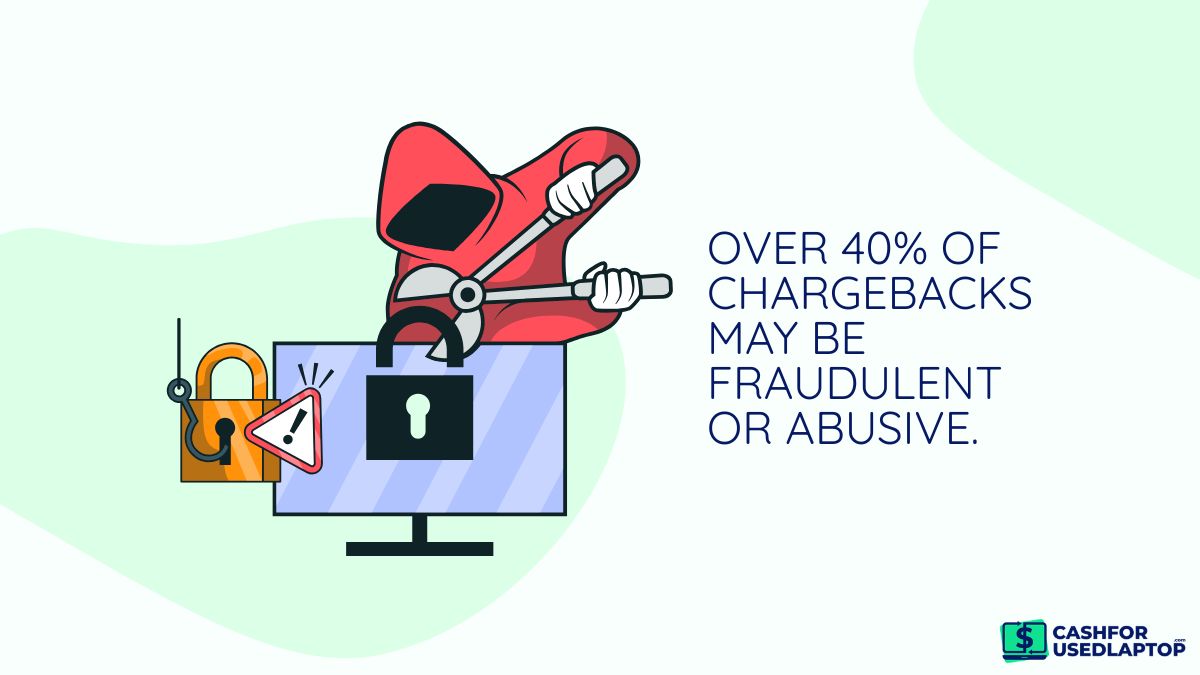
Chargebacks are often referred to as “friendly fraud” and make up a significant share of disputes. Industry analyses from Juniper Research estimate that over 40% of chargebacks may be fraudulent or abusive.
In laptop sales, this usually happens after the device, often reset, packaged, and shipped, is already in the buyer’s possession.
3. Overpayment Traps
The amount doesn’t match what was agreed. It’s higher. A buyer follows up quickly and frames it as a mistake. Asks for the difference to be sent back. The request feels reasonable, something to correct and move past. This becomes more common when there’s uncertainty around what your laptop is actually worth, making price manipulation easier.
But the initial payment doesn’t always hold.
What appears as an overpayment is often temporary. Once the refund is issued, the original transfer is reversed or disappears. The adjustment becomes a loss.
This phenomenon often shows up in laptop listings, especially for newer or high-value models, where buyers try to move the deal quickly.
4. Phishing Through “Helpful” Links
Not every interaction is about the laptop itself. A link is shared, positioned as part of the process. Payment confirmation, shipping label, verification step. It looks relevant. Sometimes expected.
But it leads somewhere else. In some cases, sellers are asked to “verify” details related to the laptop shipment or payment, which is where the actual compromise begins.
Phishing remains one of the most reported cybercrime methods, with over 300,000 complaints recorded annually by the FBI Internet Crime Complaint Center. The approach is often linked to transactions that shift users off-platform.
That’s why data security when selling a laptop plays a critical role in the process, not just the transaction itself.
5. Address & Shipping Manipulation
Shipping a laptop introduces a different kind of risk. An address is shared, confirmed, and used to move things forward. Then it changes.
A new location is requested. A last-minute update. A small adjustment that seems practical enough to accept. The transaction continues without much pause. But those changes can affect coverage and documentation. Especially when they move outside what was initially agreed.
Everything still looks aligned. The process continues. Just under different conditions than it started with.
6. Device Switching & Return Scams
When the transaction involves shipping, the risk doesn’t always end at delivery. A buyer receives the laptop. Then raises an issue: wrong specs, not as described, or faulty condition. A return is initiated.
But the device that comes back isn’t always the same.
In some cases, it’s a different model. In others, parts have been swapped. The original laptop, especially if it’s a newer or higher-value model, is no longer part of the transaction.
Because laptops are easy to reset and resell, they’re particularly vulnerable to this kind of exchange.
7. Data Access & “Testing” Requests
Not every risk is financial. Some buyers ask to “test” the laptop before completing the deal. It sounds reasonable. Especially for higher-value devices.
But access creates exposure.
If the laptop isn’t properly reset, personal files, saved sessions, or account data may still be accessible. Even brief access can be enough.
In these cases, the device isn’t the target. The data is.
Here’s a breakdown of the most common scams and how they take place:
|
Scenario |
How It Appears (Laptop Sale) |
What’s Actually Happening |
|
Fake payment confirmation |
Buyer shares proof after agreeing on laptop price |
No actual funds received |
|
Chargeback/reversal |
Laptop delivered, payment later disputed |
Transaction reversed after delivery |
|
Overpayment |
An extra amount sent for the laptop |
Initial payment fails after refund |
|
Phishing link |
“Verification” or delivery link shared |
Credentials or data being captured |
|
Address change |
Laptop delivery details updated mid-process |
Seller protections may no longer apply |
|
Device switching/return |
The buyer reports an issue and returns the laptop |
A different or altered device is sent back |
|
Data access/testing request |
The buyer asks to test the laptop before purchase |
Personal data or access is exposed |
Red Flags That Often Get Ignored
The signals are usually subtle. Easy to pass over in the moment when selling a laptop.
- A push to move quickly. The timeline feels tighter than expected, with little room to pause or verify.
- An offer that sits slightly above market value. Just enough to feel like a good deal.
- A request to continue the conversation off-platform. Framed as convenience, but it removes visibility.
- Payment-related urgency. Confirmation is expected quickly, sometimes before it’s fully verified.
Individually, these don’t always raise concern and fit within normal laptop-selling interactions. But taken together, they start to shift the direction of the transaction.
Research published in the National Center for Biotechnology Information shows that time pressure significantly reduces a person’s ability to detect fraud cues, especially in transactional environments.
The signals are there from the start. Just not always treated as part of a larger pattern.
Mistakes That Make Sellers Easy Targets
The way a laptop is listed often shapes what follows. Missing details around specs, such as RAM, storage, model year, or battery condition, create gaps. And those gaps invite more back-and-forth.
Unclear listings for laptops, where value closely correlates with specifications, often draw more opportunistic inquiries.
Guidance across resale platforms and industry sources points to a consistent pattern: listings with limited clarity tend to attract more uncertain or opportunistic inquiries. Lower friction, fewer constraints, easier entry.
The process becomes less defined from the start. Part of a safer process includes knowing how to factory reset your laptop safely before completing the transaction.
What Safer Laptop Selling Actually Looks Like
Safer laptop selling doesn’t rely on instinct. The effectiveness of the process hinges on how it is handled.
A few things stay consistent.
- Payments are verified at the source. Not through screenshots or shared confirmations, but directly within your own account.
- Communication stays within the platform. It keeps the interaction visible, documented, and easier to track if needed.
- Details like the laptop’s specs, condition, and final price are confirmed before anything moves forward.
- Shipping information remains unchanged. The address used is the one initially confirmed. No mid-process adjustments.
- The pace is controlled. There’s no pressure to respond instantly or complete the transaction without checking.
The Shift Toward Structured Laptop Selling
More sellers are moving toward structured platforms when selling laptops because the process is more defined. There are fewer variables and fewer unknowns. Overall, less dependence on individual judgment at every step.
The difference shows up in how fraud plays out. According to the Federal Bureau of Investigation’s Internet Crime Complaint Center, over 800,000 fraud complaints were reported in a single year, with losses exceeding $10 billion, many tied to online transactions involving high-value devices like laptops.
Structured systems approach laptop selling differently. The payments move through established channels, and interactions remain contained within the platform. The verification follows a set process rather than individual judgment. Lastly, the transaction stays consistent from start to finish.
Conclusion
Selling a laptop safely doesn’t depend on spotting obvious scams. It depends on how the process is handled from the beginning. especially when the item itself carries clear resale value. Most issues don’t start with something clearly wrong. They build through small assumptions, steps that feel routine, and signals that seem sufficient.
When payments are properly verified, communication stays contained, and details about the laptop are confirmed before moving forward, the gaps narrow. And when handled properly, the benefits of selling your old laptop go beyond the financial return—they include control, clarity, and reduced risk.
For those looking for a more reliable and straightforward option, platforms like CashForUsedLaptop offer a structured way to sell laptops without the usual uncertainty.